
 English
  русский
  Español
  Português
 Call us
+86-511-84522866

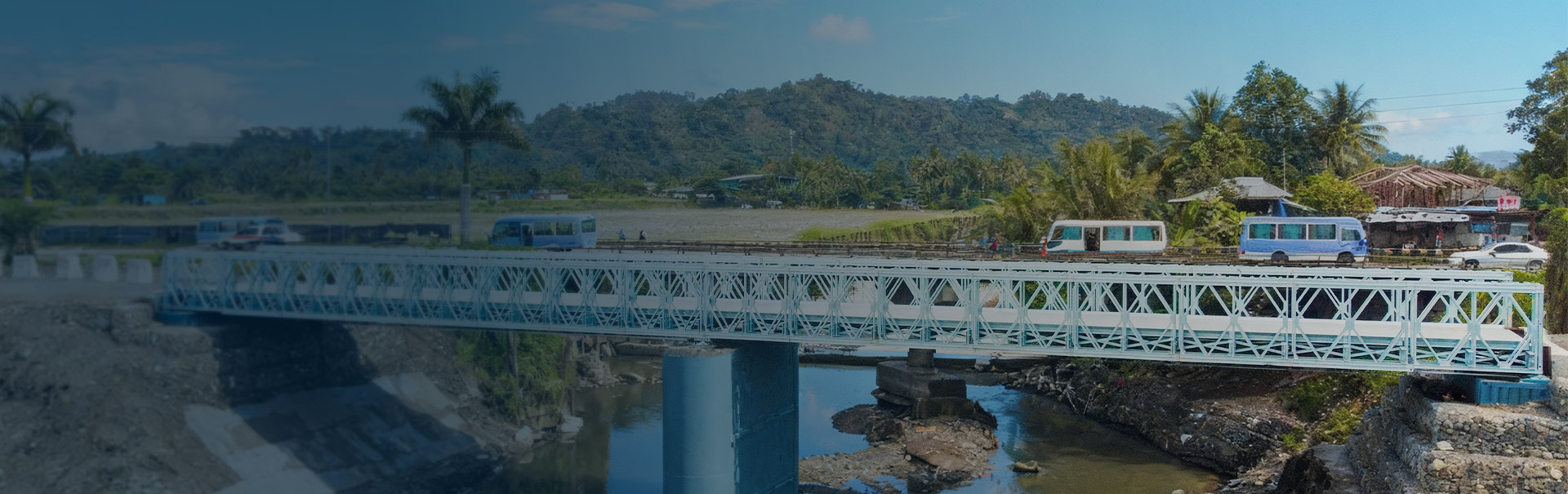
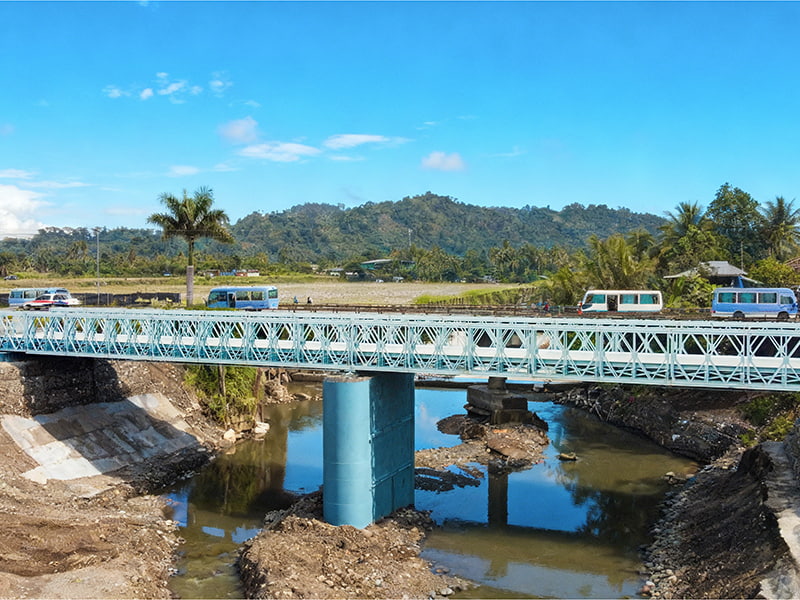

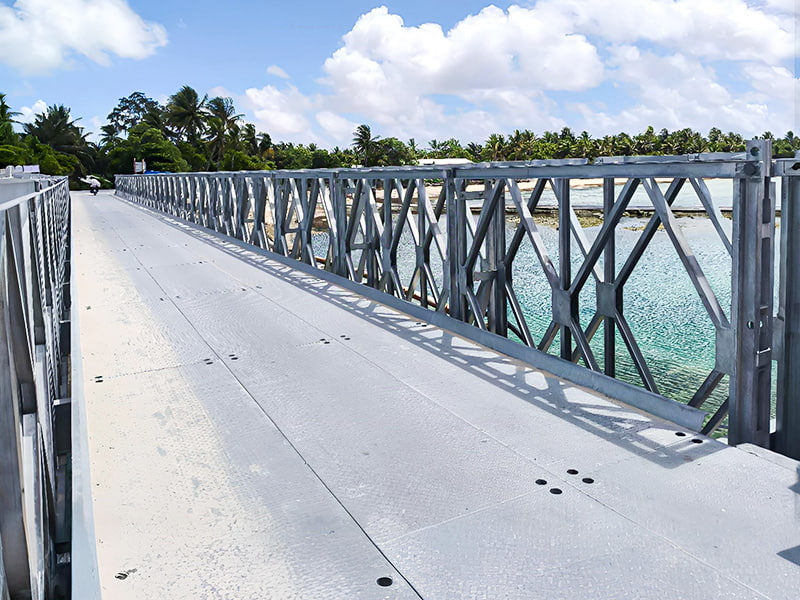
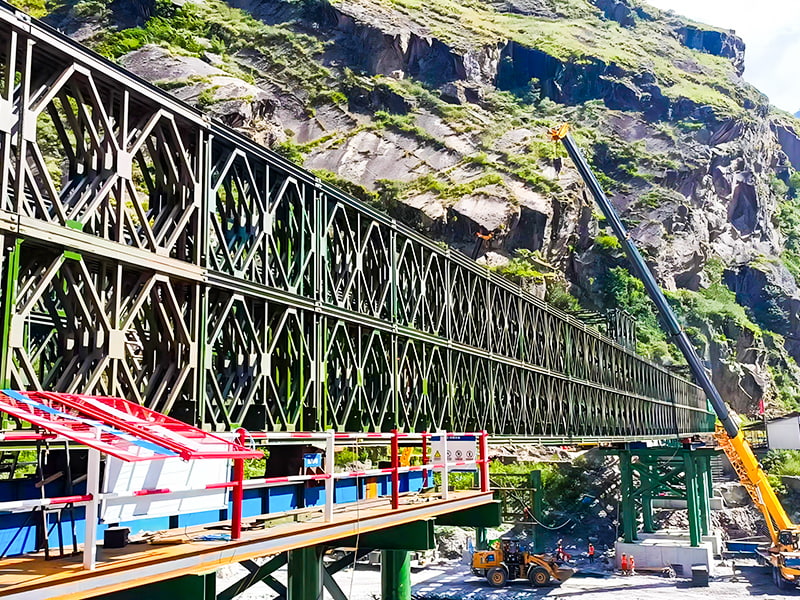
The CB 200 Bailey Bridge is designed with "efficient adaptation + performance upgrade" as its core competitive advantage. The modular units can be flexibly combined, allowing for the quick construction of spans ranging from 21 to 60 meters, meeting the demands of emergency traffic restoration, water conservancy construction, infrastructure repairs, and other scenarios. Compared to traditional models, material waste is reduced, construction time is shortened, and it supports customization according to national standards (GB), American standards (ANSI), and European standards (EN). The structure is stable and durable, can be repeatedly disassembled and reused, and is suitable for both temporary passage and semi-permanent use, offering a far superior cost-performance ratio compared to similar products.
A TRUSTED MANUFACTURER OF MODULAR STEEL BRIDGES




 ZHONGHAI BRIDGES









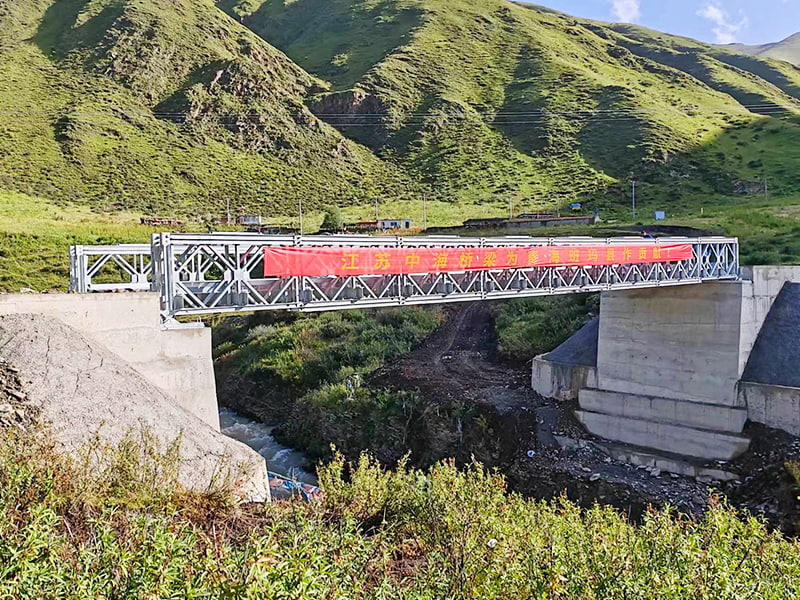
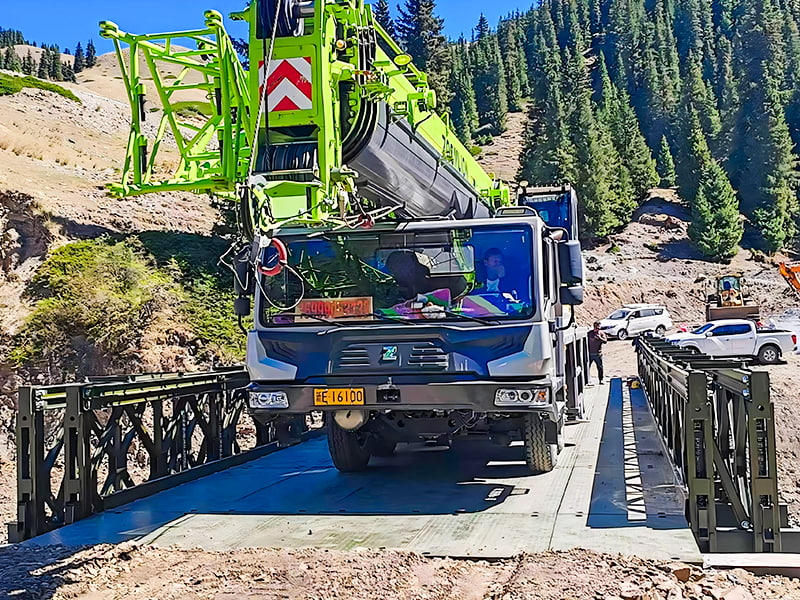
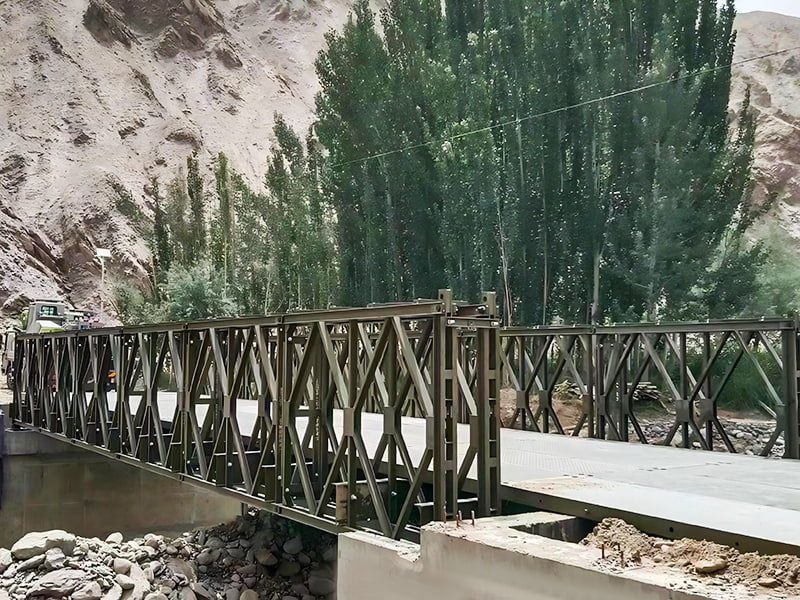
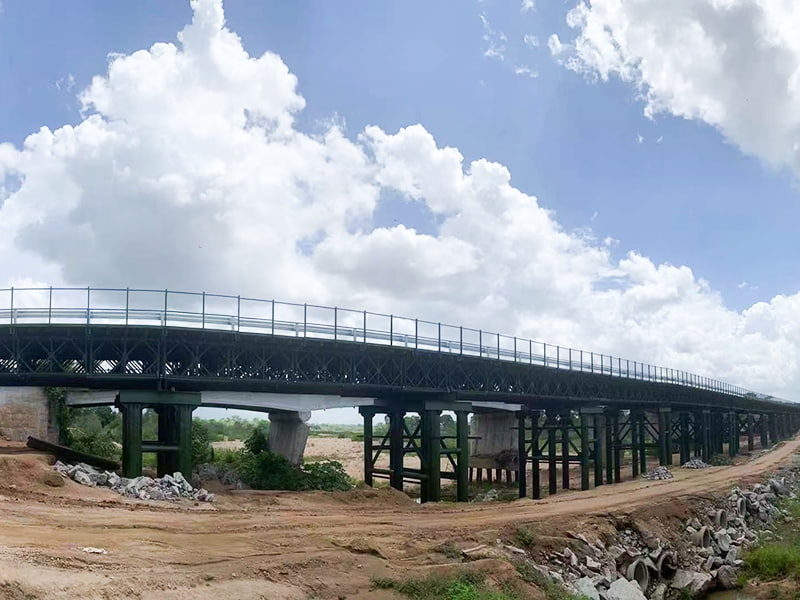
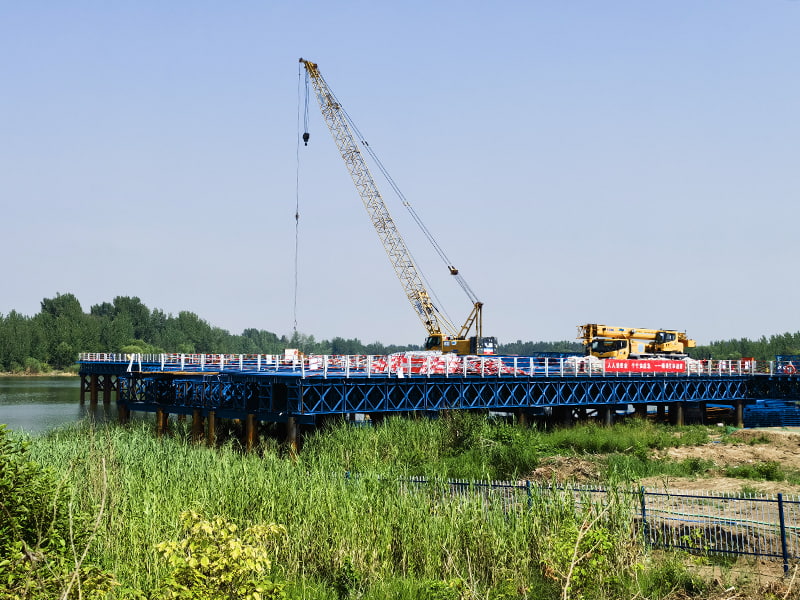
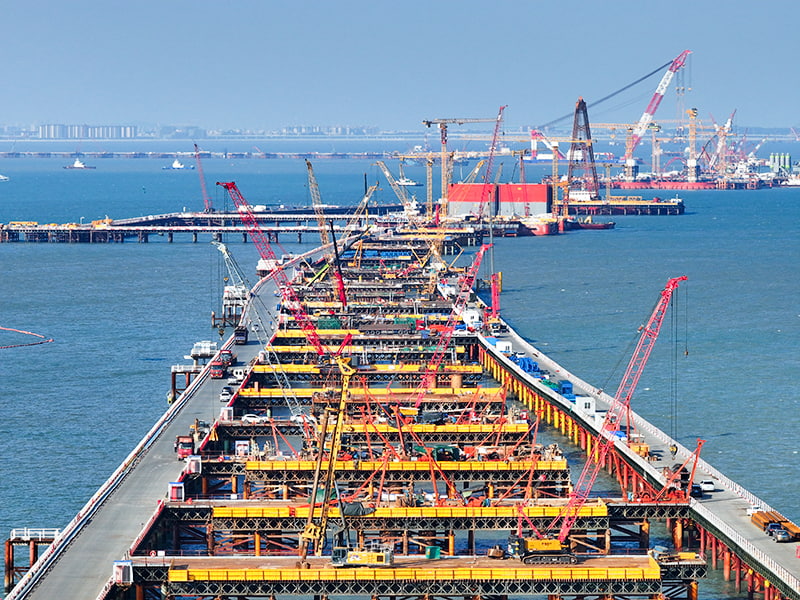
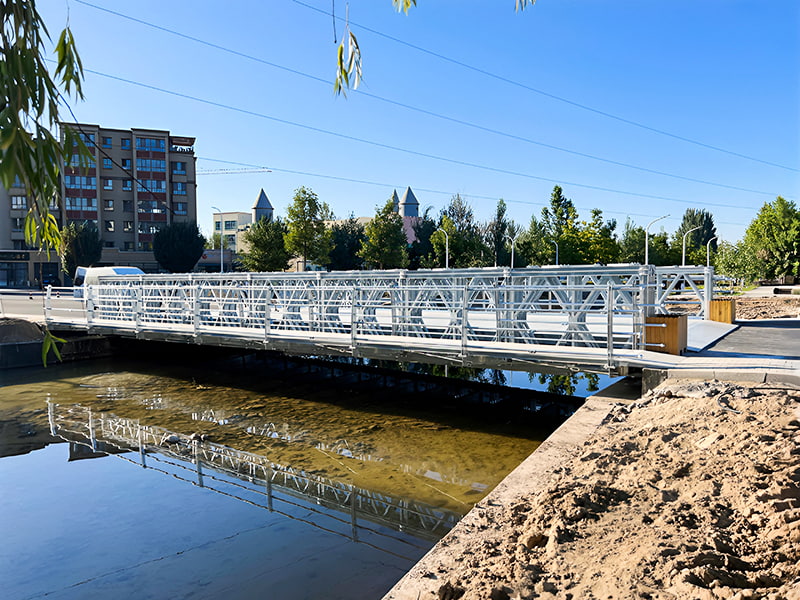
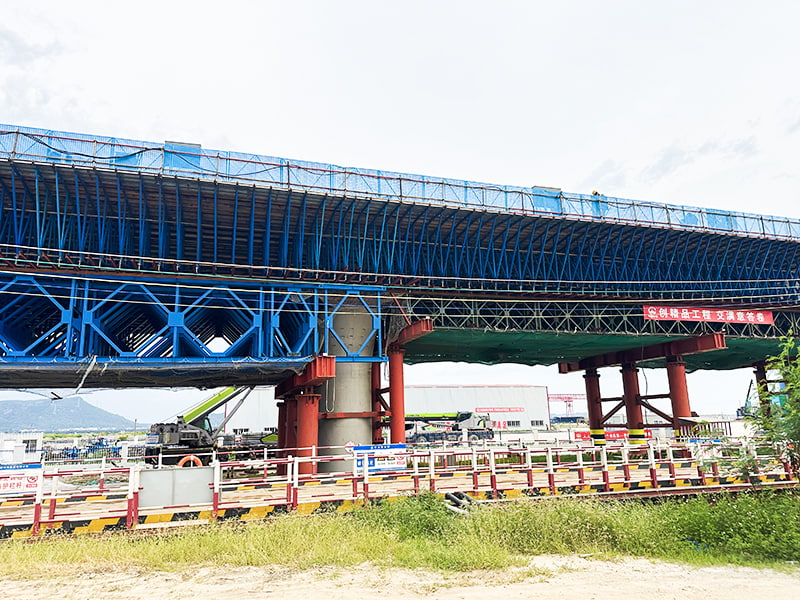
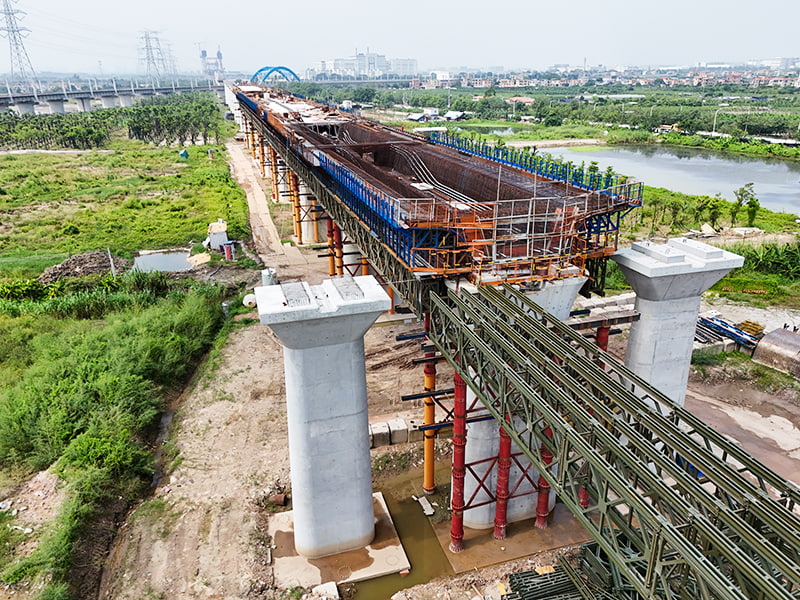
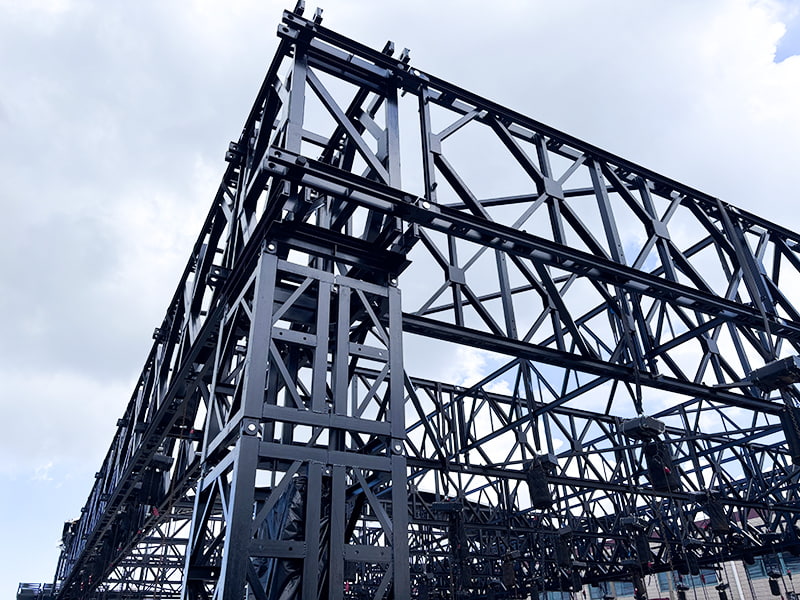
Modular panel bridging solves a specific engineering problem: moving heavy traffic across rivers, gorges, or damaged infrastructure without months of formwork or falsework. The CB 200 Bailey Bridge sits at the upper end of the compact panel bridge family, built around a taller truss section that raises both span reach and load rating compared with earlier compact designs. Its scope runs from single-lane rural crossings to reinforced double-lane highway bridges, and because the components are bolted and pinned rather than cast or welded on site, a crew can restore river access in days rather than months. Understanding how the system is engineered, rated, and produced helps procurement teams match the right configuration to a project instead of over-ordering steel.
The defining change from the earlier compact-100 series is truss height. Panel height was raised from 1.448 meters to 2.134 meters, which increases the moment capacity of each panel and is what allows the CB 200 system to carry two-lane traffic rather than a single light lane. The panel itself keeps the familiar hole-center spacing of 3.048 by 2.134 meters, so components remain interchangeable within the same family of trusses, transoms, and end posts.
Two design details matter more than they first appear. Reinforced chord joints and panel joints are arranged in a staggered pattern along the truss, which reduces the inelastic deformation that would otherwise build up around pinhole gaps under repeated loading. Erection also follows a pre-arch method, camber built in ahead of time so that mid-span and vertical deflection under live load settle back toward a level deck rather than a permanent sag.
Relative to a lighter panel bridge, the CB 200 truss puts more of its engineering weight into deflection control and joint precision than into raw material bulk, which keeps the system easy to transport while still handling highway load classes.
Choosing between a single-lane and double-lane build changes almost every other number in the specification. A standard single-lane deck runs 3.15 meters wide with an extra-wide single-lane option at 4.2 meters, while a double-lane CB 200 Bailey Bridge opens the deck to 7.35 meters. Span capability moves in the opposite direction as width increases: a single-lane build can reach up to 60.96 meters, while a double-lane configuration is typically rated to 45.72 meters before additional piers or reinforced chords are needed.
| Configuration | Deck Width | Max Span |
|---|---|---|
| Single lane, standard | 3.15 m | 60.96 m |
| Single lane, extra-wide | 4.2 m | 60.96 m |
| Double lane | 7.35 m | 45.72 m |
Row count is the third lever. The truss can be assembled as a single row for light-to-medium loads or built out to two, three, or four rows where longer spans or heavier vehicles are expected, with reinforced chords available in light or heavy grades depending on the target load class.
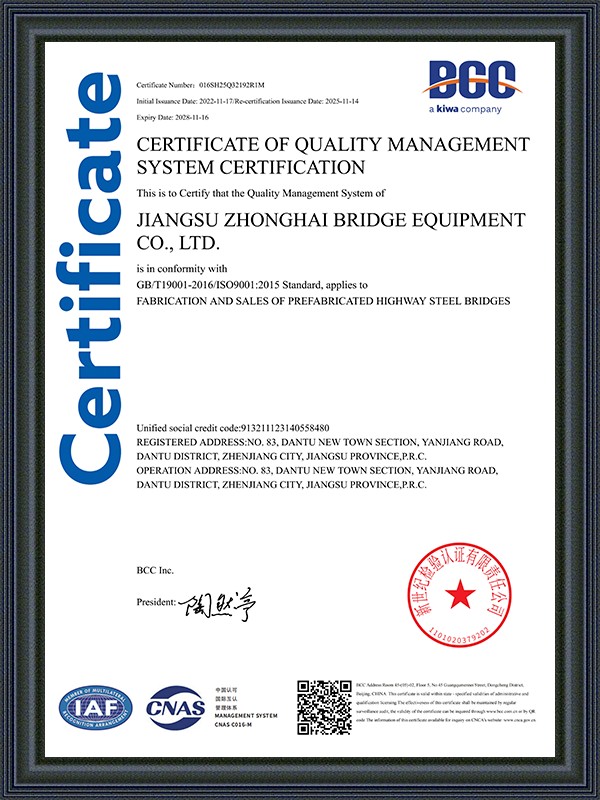
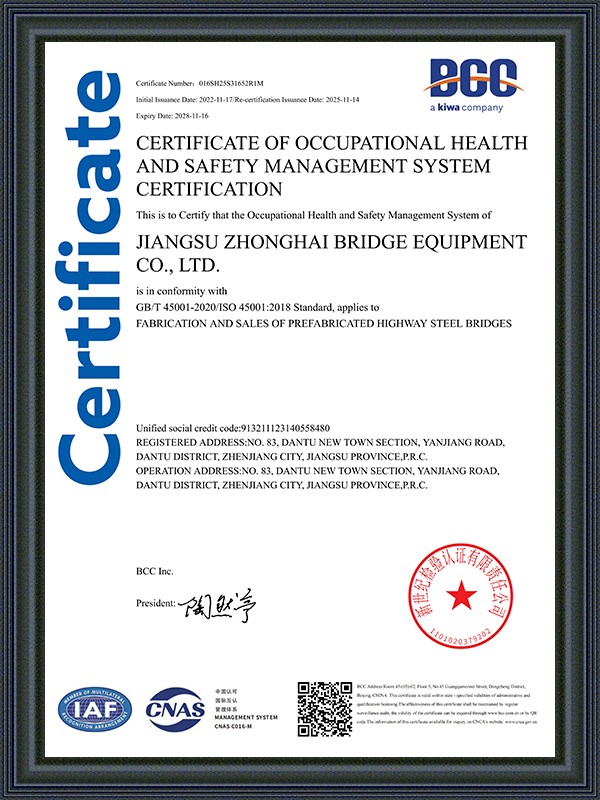
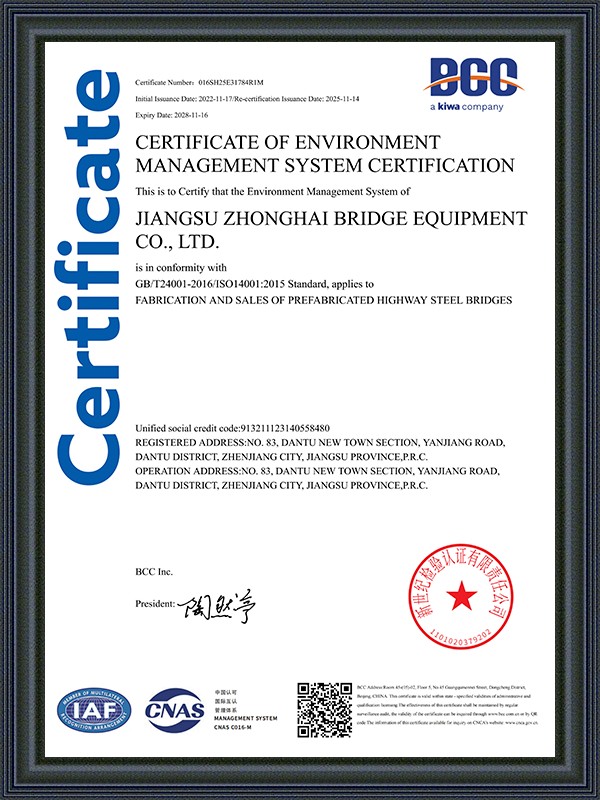
Jiangsu Zhonghai Bridge Equipment Co., Ltd. produces its CB 200 components from a facility in Jiangsu Province, a location chosen in part for the regional logistics network that keeps delivery times predictable for both domestic and export orders. Panel bridges are only as dependable as their weakest weld or chord, so the quality process is built to catch problems before a panel ever reaches a jobsite.
That process runs on a closed-loop basis: raw steel is checked on arrival, welds and structural joints are validated during assembly, and finished trusses go through a final inspection before packing. The goal is straightforward, panels that hold up under extreme climatic swings, shifting hydrological conditions at river crossings, and repeated heavy load cycles over years of service, not just on the day they leave the factory.
For buyers sourcing infrastructure-grade steel, this kind of raw-material-to-final-assembly traceability matters more than a spec sheet alone. It means each panel can be traced back through its production history if a project engineer needs to confirm exactly what went into a specific batch.
Where a CB 200 system goes to work shapes how it should be specified. Disaster-relief and emergency road repair crews typically prioritize fast single-row erection to restore access quickly. Mining and forestry access roads often call for reinforced chords able to handle repeated heavy-truck cycling. Rural highway crossings tend to sit in the middle, balancing span length against deck width for two-way traffic. Construction sites also use the same panel system as temporary trestle bridges or formwork support platforms, taking advantage of the fact that the same components can be reconfigured project to project instead of being scrapped.
Because the panels are pinned rather than welded on site, reconfiguring a bridge for a new span or load class later usually means adding or swapping components rather than starting over, which is part of why compact panel systems remain a practical choice for organizations managing several sites over time.
The main difference is truss height, raised to 2.134 meters from 1.448 meters, which increases load-carrying capacity and makes double-lane configurations possible.
Yes. Built out to a 7.35-meter deck width, the system supports double-lane traffic, though span capacity drops from around 60.96 meters to roughly 45.72 meters compared with a single-lane build.
It depends on span and load. Lighter, shorter crossings often work with a single row, while longer spans or heavier design loads move up to two, three, or four rows.
Panels are typically finished with either hot-dip galvanizing for long-term outdoor exposure or an epoxy zinc-rich coating where a lighter, repaintable finish is preferred.
Because components are bolted and pinned rather than cast in place, erection is measured in days for most single-lane spans, which is the main reason panel bridges get used for emergency and temporary access work.

Product Category
Bailey Bridge/Modular Bridge Modular Steel Bridge Pedestrian Bridge Modular Pipe Bridge Truss Bridge Steel StructureContact Us


Copyright © Jiangsu Zhonghai Bridge Equipment Co., Ltd. All
Rights
Reserved
OEM CB 200 Bailey Bridge Supplier
Custom CB 200 Bailey Bridge Factory
