
 English
  русский
  Español
  Português
 Call us
+86-511-84522866

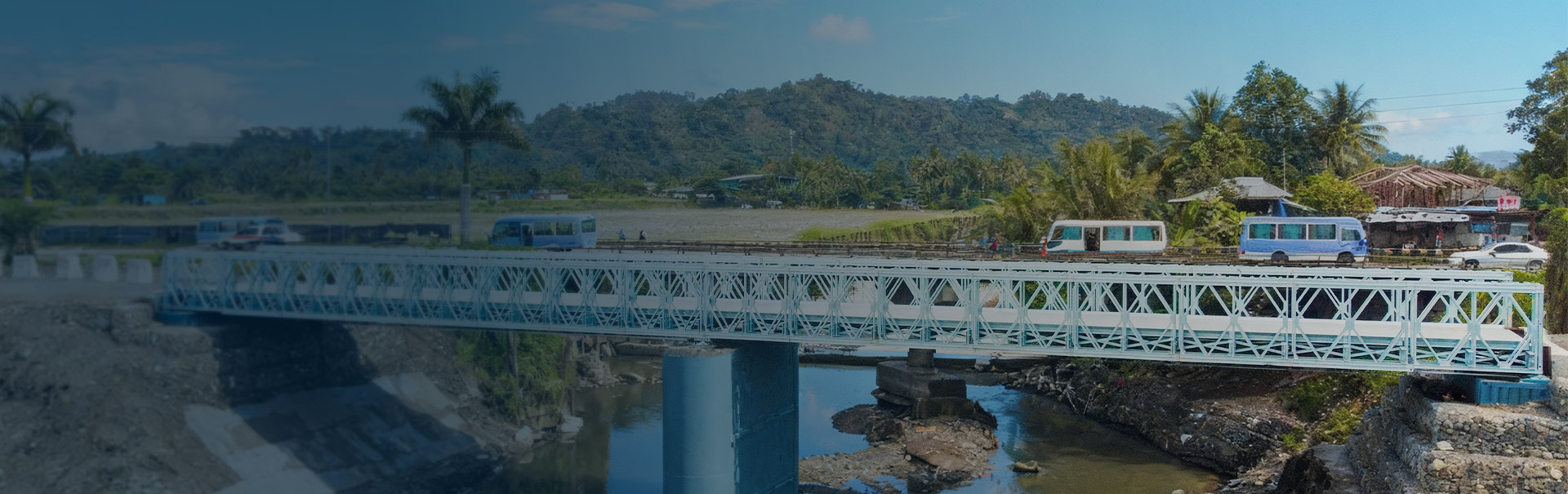
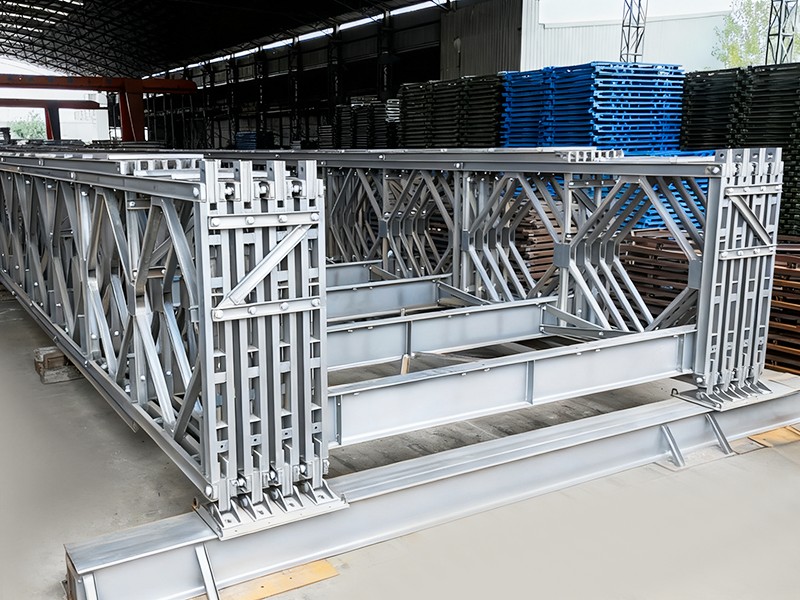

The Large span heavy load steel bridge is a type of steel bridge specifically designed for heavy load traffic and large span requirements, optimized for large span stress, heavy loads, and the practical usage demands of engineering projects. This bridge combines the high strength and durability of steel, while its structural design fully considers the mechanical performance under large span and heavy load conditions, ensuring the bridge maintains excellent stability and safety even in extreme usage environments. The Large span heavy load steel bridge also takes into account the actual construction requirements on-site, offering strong adaptability and flexibility to adjust based on varying terrain, climate, and construction conditions. Whether in complex geographical environments or under stringent load requirements, this bridge provides reliable support and is widely used in heavy-load, large-span projects such as highways, large transportation hubs, and mining transportation.
A TRUSTED MANUFACTURER OF MODULAR STEEL BRIDGES




 ZHONGHAI BRIDGES
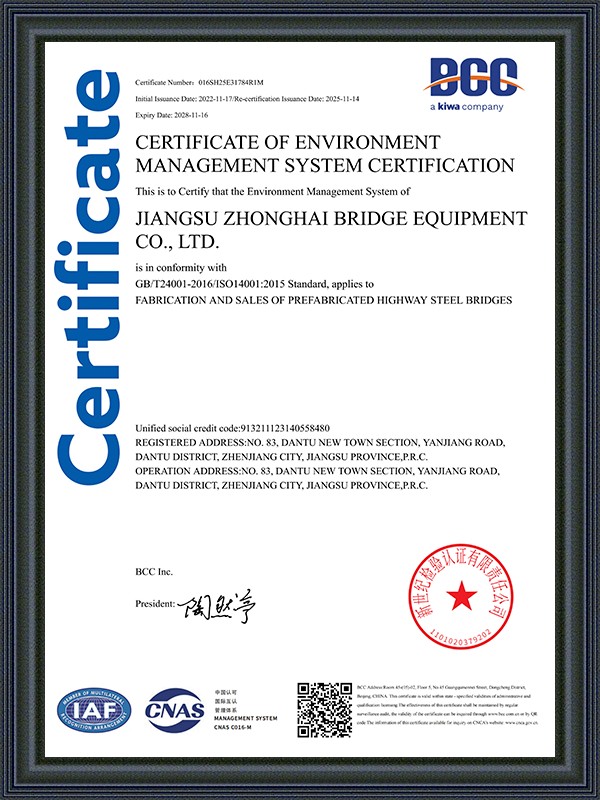


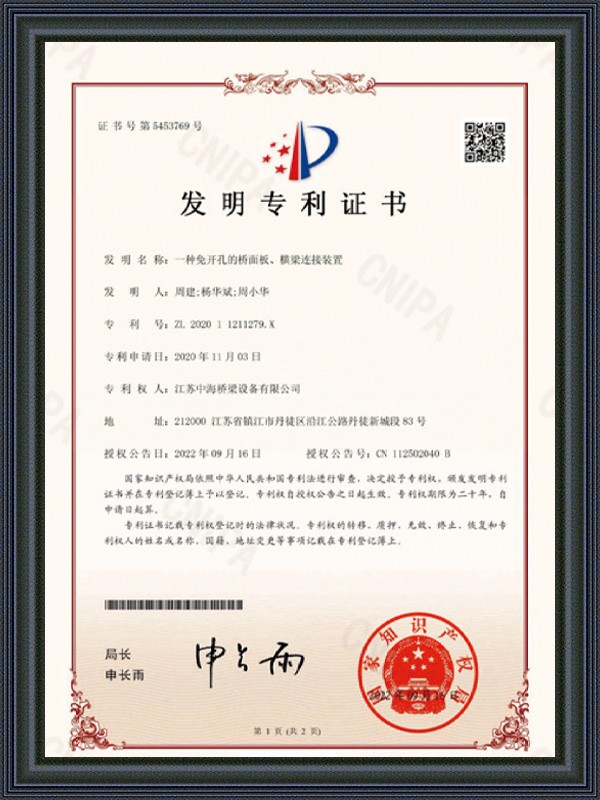






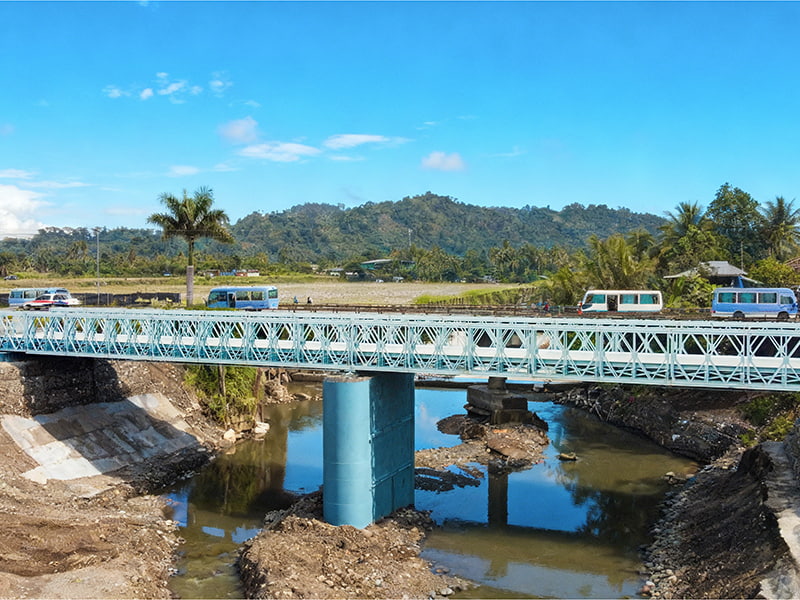
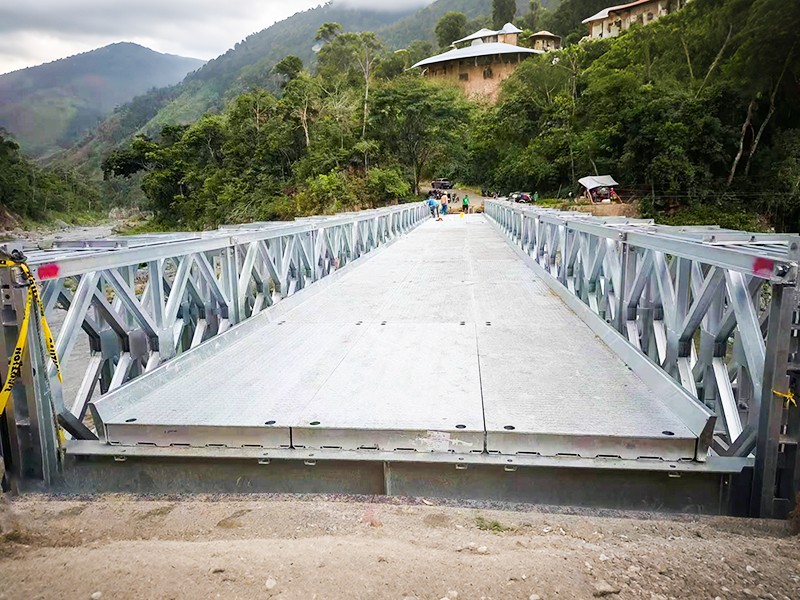
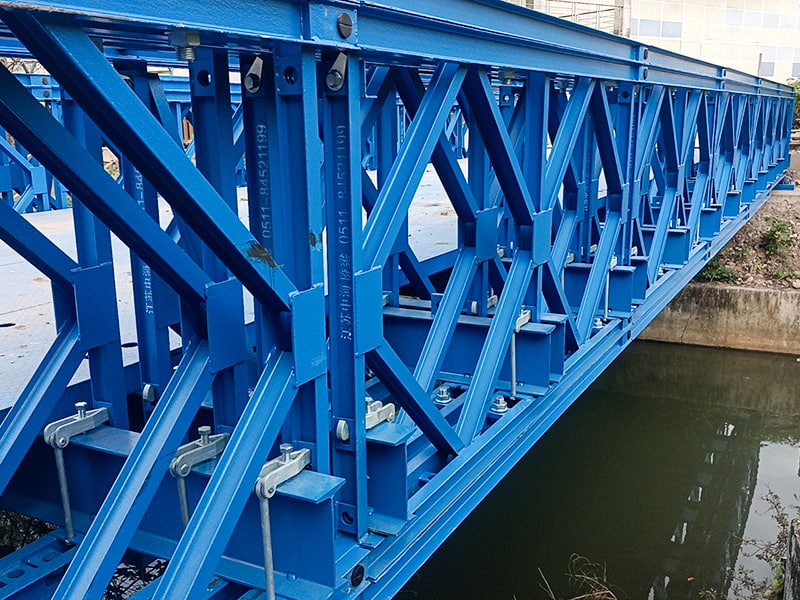
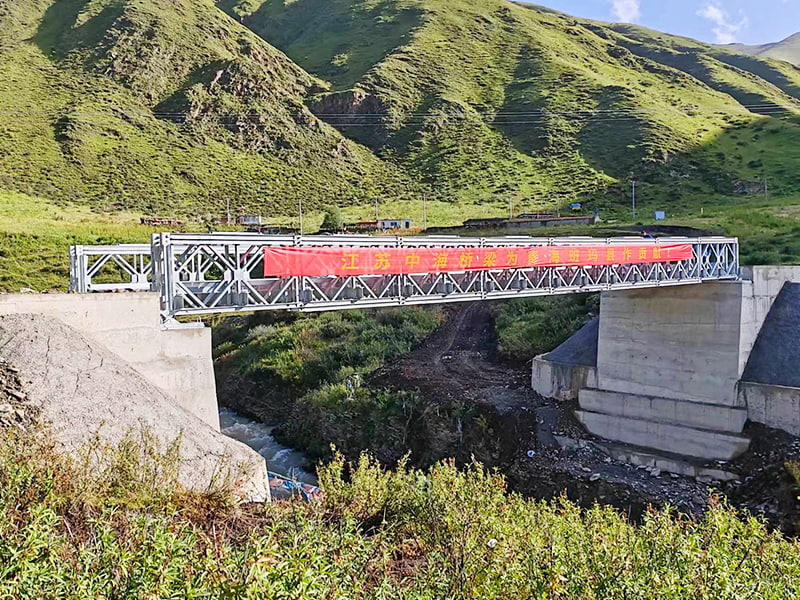

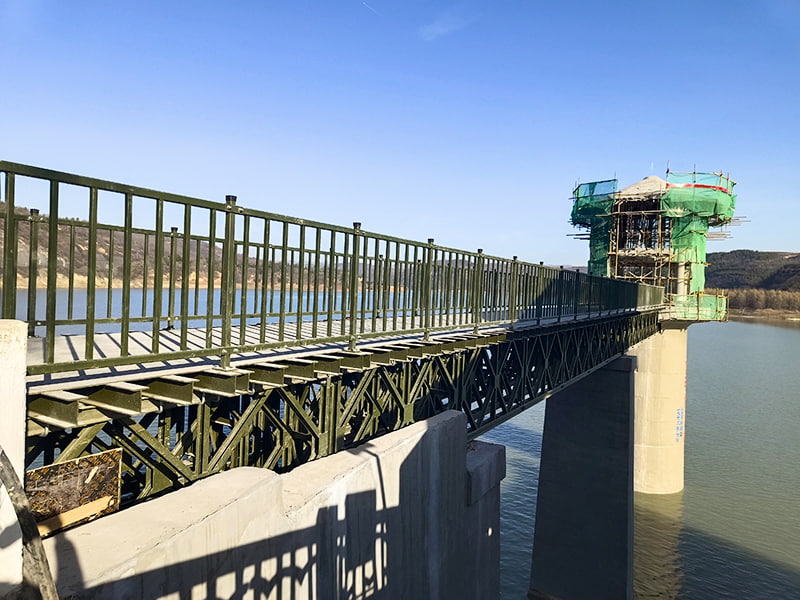

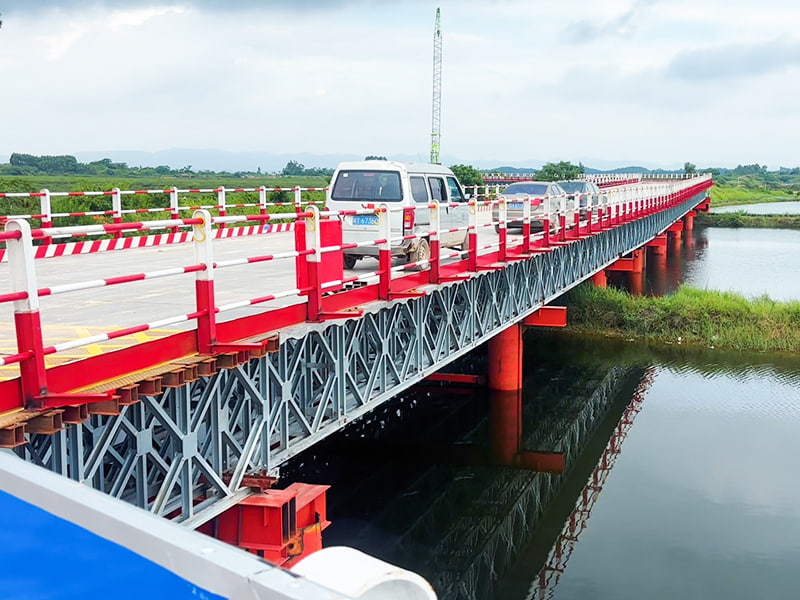
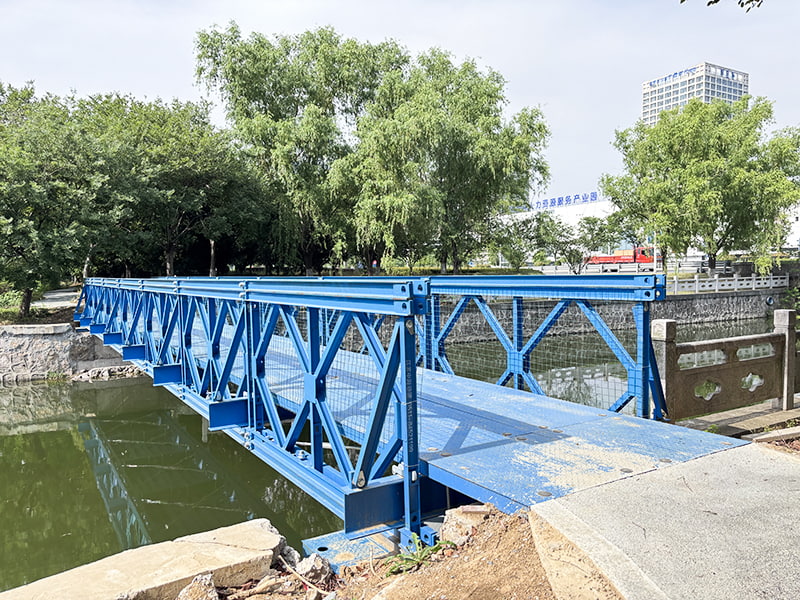

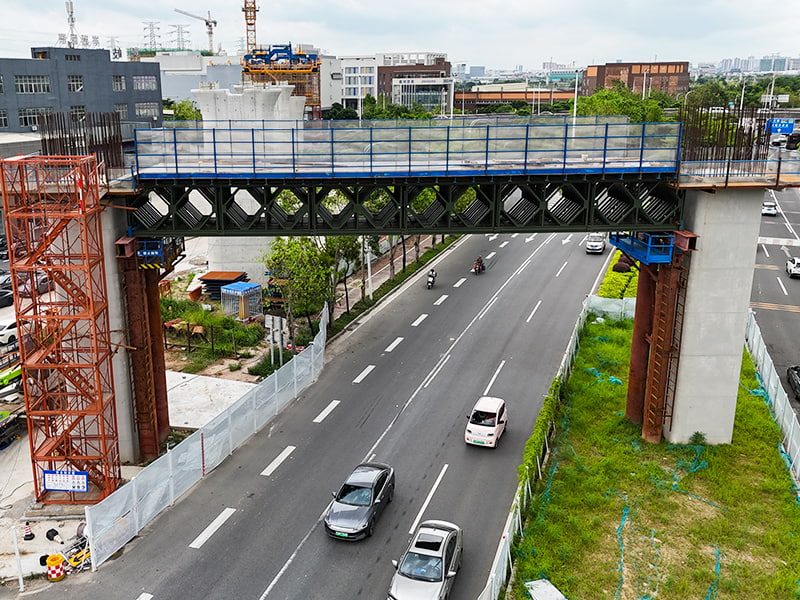
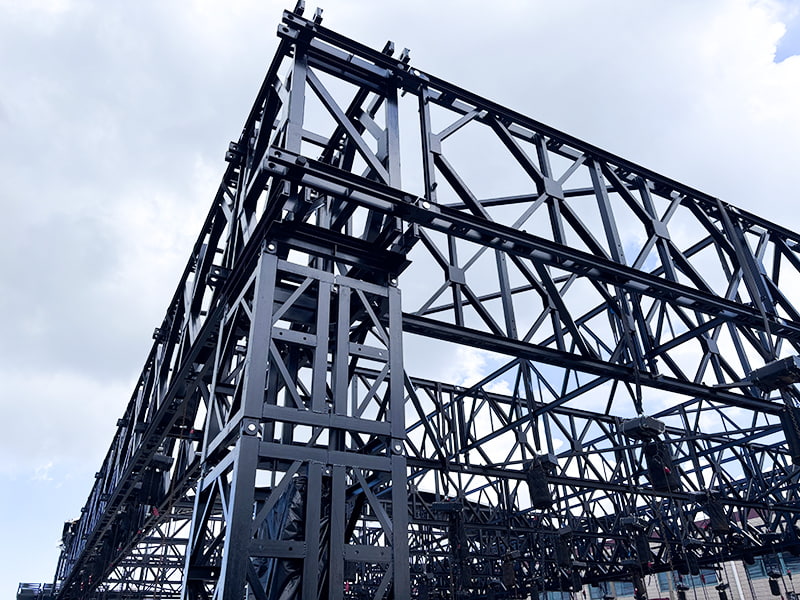
Every large-span crossing that has to carry serious traffic loads — a disaster-relief access route, a temporary detour around a failed culvert, or a permanent rural connector — comes down to one engineering trade-off: span length versus load capacity. A Large Span Heavy Load Steel Bridge is built to hold that trade-off in balance, using modular steel panels, reinforced chords, and carefully calculated bearing points to support heavy vehicle loads over distances a single-span beam structure could never reach economically. Terms like heavy load bearing steel bridge structure, large span modular steel bridge design, heavy duty steel bridge, Long Span Steel Bridge, and Heavy Load Steel Bridge all describe variations on the same underlying discipline — matching panel configuration, reinforcement, and foundation to the specific span and load a project actually demands, rather than defaulting to the biggest structure available.
At Jiangsu Zhonghai Bridge Equipment Co., Ltd, load analysis happens before a single panel gets selected. Span length, vehicle class, axle configuration, and traffic frequency all feed into a structural model first — because for a heavy load bearing steel bridge structure, the governing question is rarely "what's the maximum span" alone. It's how much of that span can be crossed while still carrying rated axle loads without excessive deflection at midspan.
As a general engineering reference point, single-single (SS) truss configurations typically top out around 30 meters at moderate load ratings, while double-double (DD) reinforced configurations can extend usable span past 60 meters under considerably heavier axle loads. That difference comes almost entirely from how panels are doubled and trussed together, not from a change in steel grade — which is why configuration strategy, not material substitution, is usually the first lever engineers pull when a project's load requirement increases.
Approximate span ranges by Bailey-type configuration; actual reach depends on load rating and reinforcement.
Choosing between SS, DS, DD, and TS isn't a preference — it's a response to site conditions. This is where our engineering team at Jiangsu Zhonghai Bridge Equipment Co., Ltd works scenario by scenario rather than defaulting to one configuration, since two projects with similar spans can call for entirely different panel arrangements once load class and support spacing are factored in.
Illustrative comparison of a DD configuration (shaded) against SS baseline across five site-relevant factors.
Span and load figures on a data sheet only mean something once they're checked against the actual site. Geotechnical conditions determine what the bridge can bear on, and environmental loading — wind, water flow, and seismic activity — determines what margin needs to be built into the structural design beyond the static traffic load alone. A heavy duty steel bridge crossing a fast-moving river channel, for instance, has to account for scour at the piers in a way a bridge over dry ground never will.
Wind loading in particular scales unevenly with span — a longer deck catches more lateral force, and the increase isn't linear once span crosses certain thresholds. This is exactly the kind of scenario-based analysis Jiangsu Zhonghai Bridge Equipment Co., Ltd applies to every site survey before a configuration is finalized, rather than applying one blanket load factor across every project.
Wind load factor rises disproportionately as span length increases, independent of traffic loading.
How a Long Span Steel Bridge gets erected is often decided as much by site access as by span length. The cantilever launching method assembles the structure on one bank and pushes it across incrementally, which works well when heavy cranes can't reach the far side or when the crossing is over water or a gorge. Crane lifting, by contrast, is faster where site access is good and pre-assembled sections can simply be set into place.
| Factor | Launching Method | Crane Lifting |
|---|---|---|
| Site access needed | Low | High |
| Best over water/gorge | Yes | Limited |
| Typical erection speed | Moderate | Fast |
Load rating and span length together, not either one alone. A short span with a heavy design load can still need a DD arrangement, while a long span carrying light foot or utility traffic might be fine as an SS. The configuration decision comes out of load analysis, not out of span length by itself.
No. Load rating describes what the superstructure — the panels and trusses — can safely carry across the span. Bearing capacity is about the foundation and support points, and whether the ground or abutment underneath can actually hold that load. A structure can be rated for a heavy load and still fail if the bearing points aren't evaluated with the same rigor.
In many cases yes, by adding chord panels or upgrading from a single to a double configuration, but it depends on the original foundation design having margin for the added weight. This is why site condition evaluation and load-rating calculations upfront matter more than they might seem to at the design stage — retrofitting a structure is always more constrained than specifying it correctly the first time.

Product Category
Bailey Bridge/Modular Bridge Modular Steel Bridge Pedestrian Bridge Modular Pipe Bridge Truss Bridge Steel StructureContact Us


Copyright © Jiangsu Zhonghai Bridge Equipment Co., Ltd. All
Rights
Reserved
OEM Heavy Load Steel Bridge Supplier
Custom Long Span Steel Bridge Factory
