
 English
  русский
  Español
  Português
 Call us
+86-511-84522866

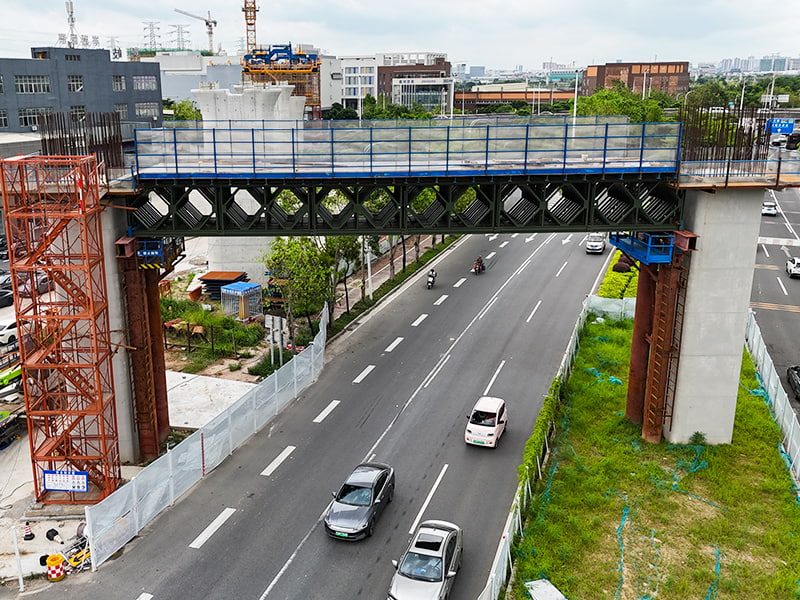

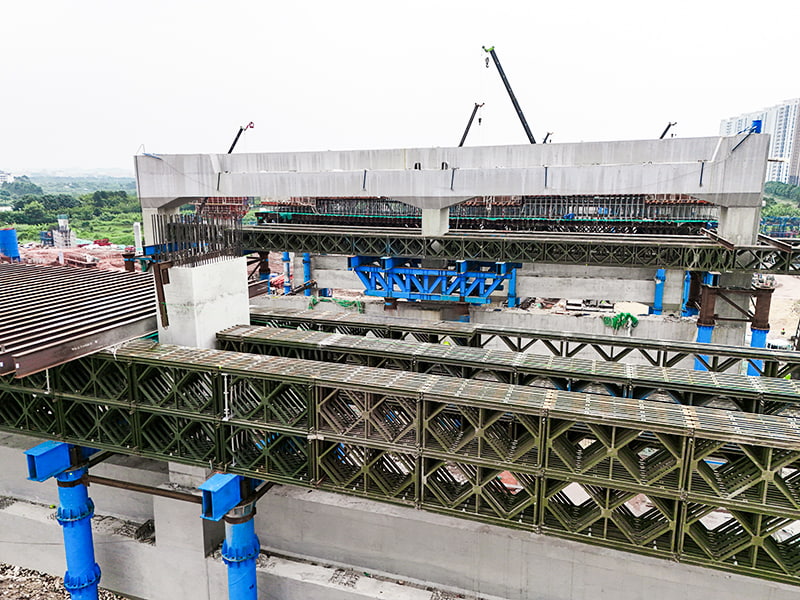
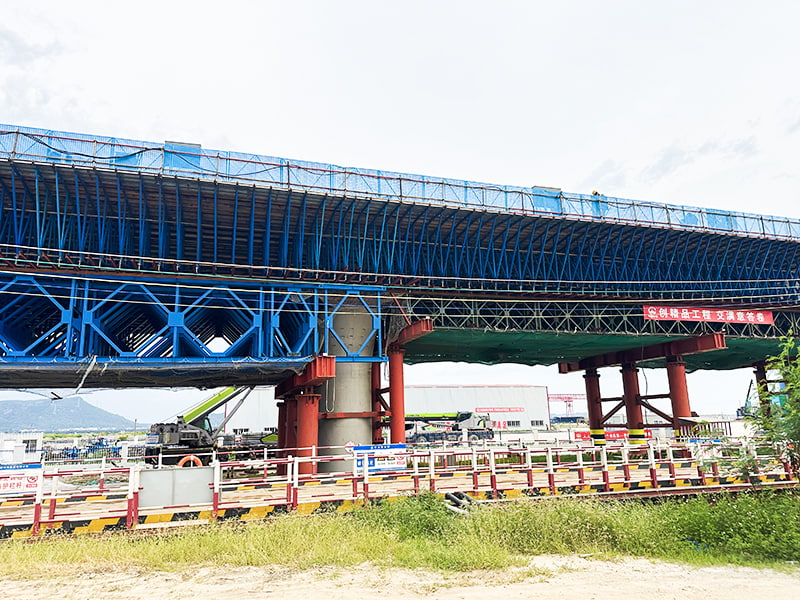
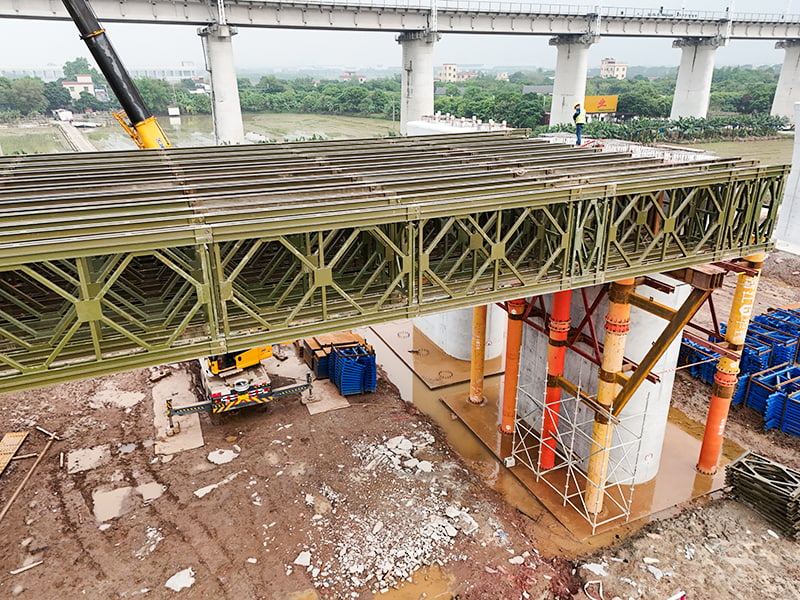
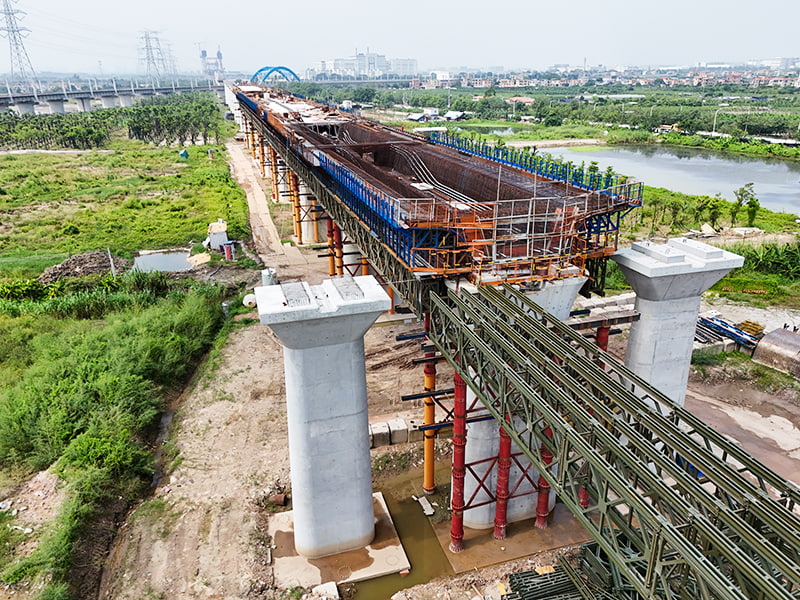
Bailey Construction Support is a temporary supporting structure built using Bailey panels as the core components, and belongs to a modular steel support system that offers flexibility and high efficiency. This support structure is widely used in various stages of bridge construction, including the pouring and assembly of foundation slabs, pier columns, and main beams. Due to its modular design, Bailey Construction Support can be quickly assembled according to different construction needs, making it adaptable to various engineering scenarios. In addition to bridge construction, Bailey Construction Support is also widely used in other temporary support situations, such as for temporary bridges, construction platforms, and scaffolding. Its reliable load-bearing capacity and efficient construction method make it highly stable and safe in complex environments, significantly improving construction efficiency, reducing project costs, and offering ease of disassembly, making it suitable for repeated use.
A TRUSTED MANUFACTURER OF MODULAR STEEL BRIDGES




 ZHONGHAI BRIDGES
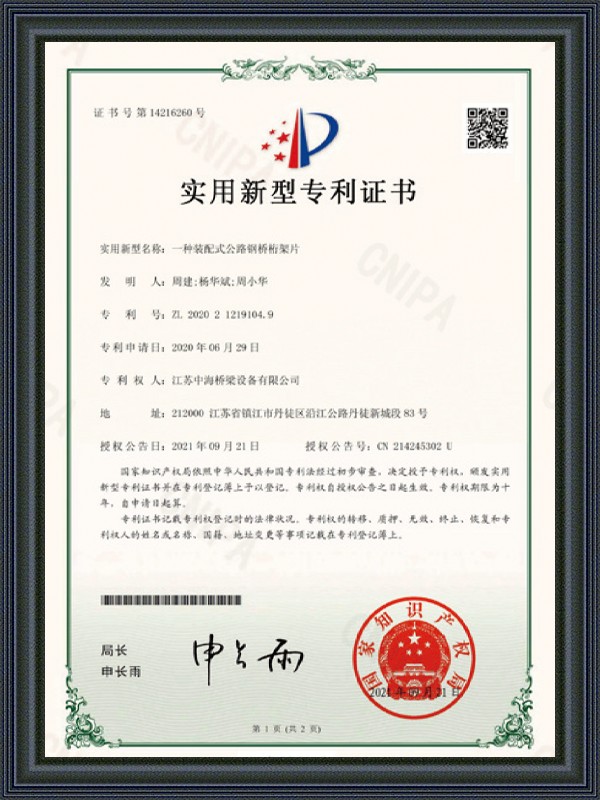
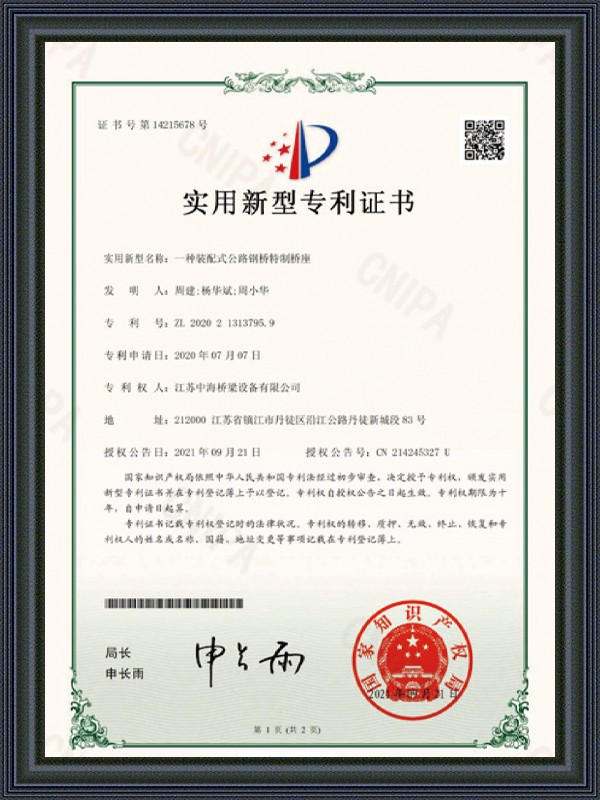
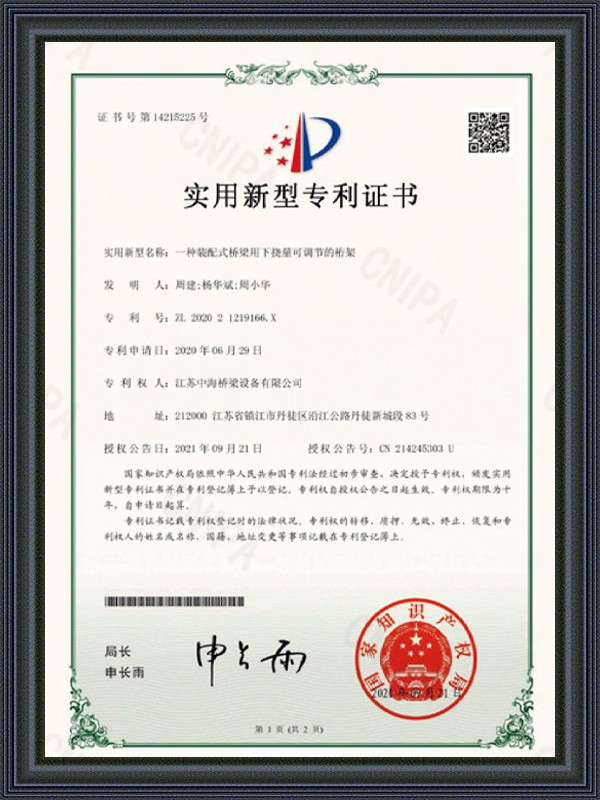
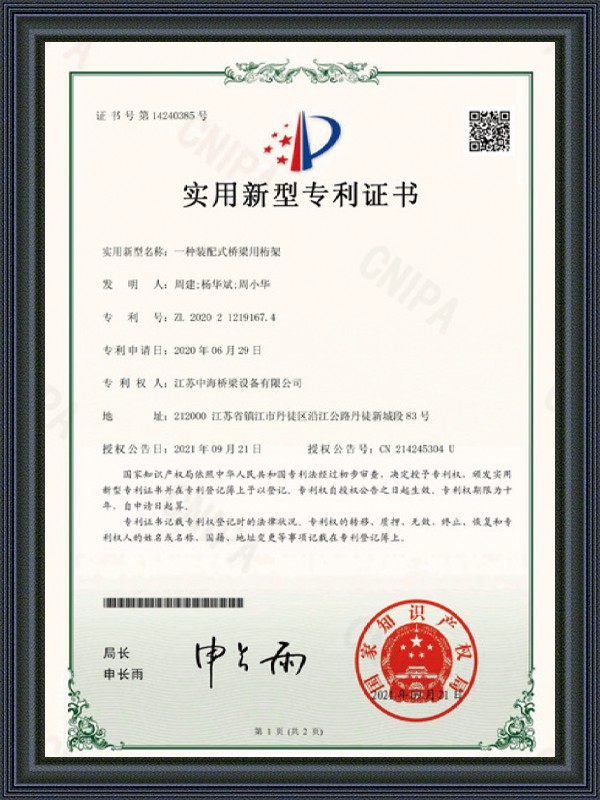
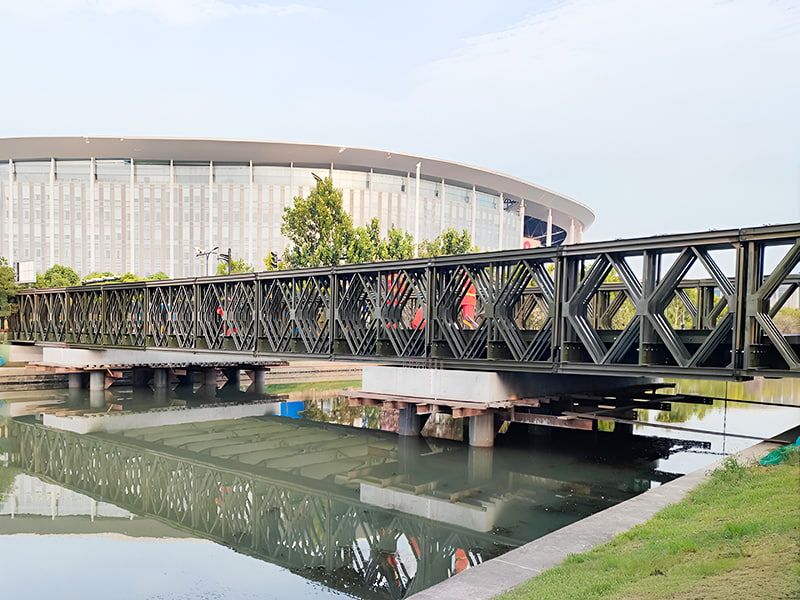
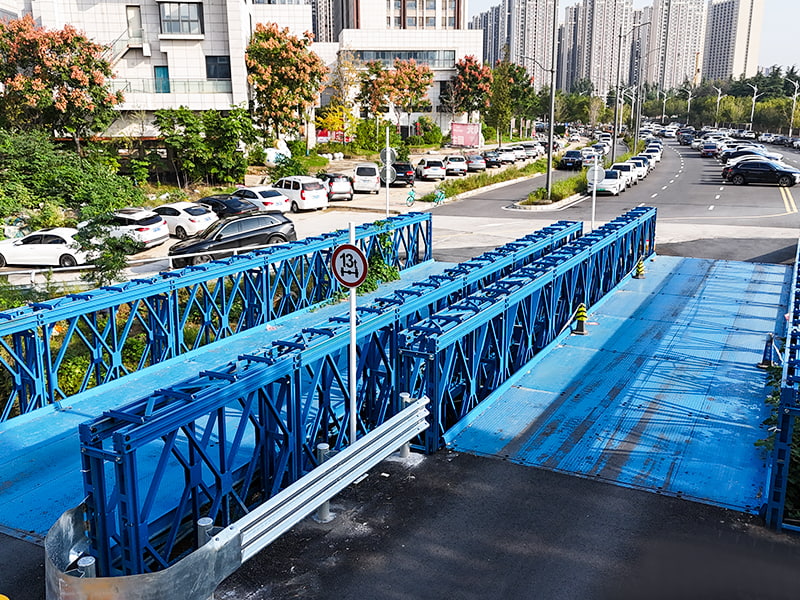
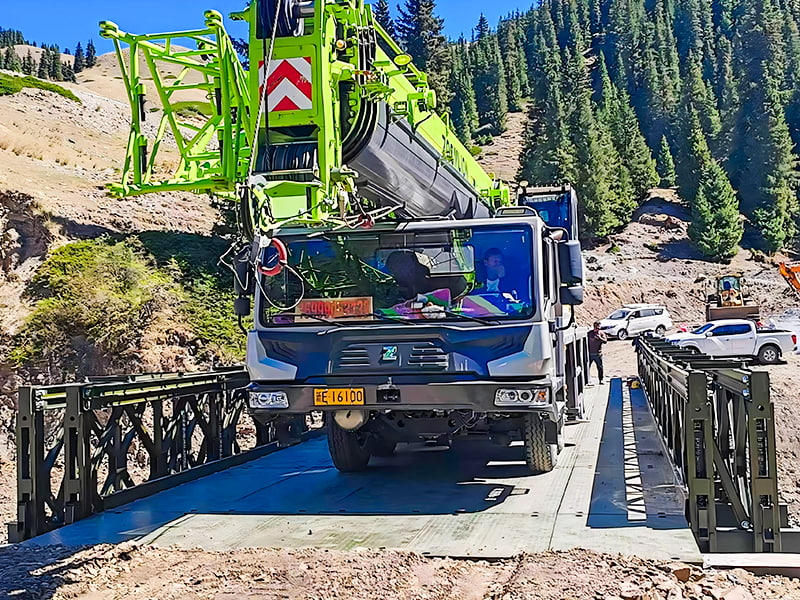
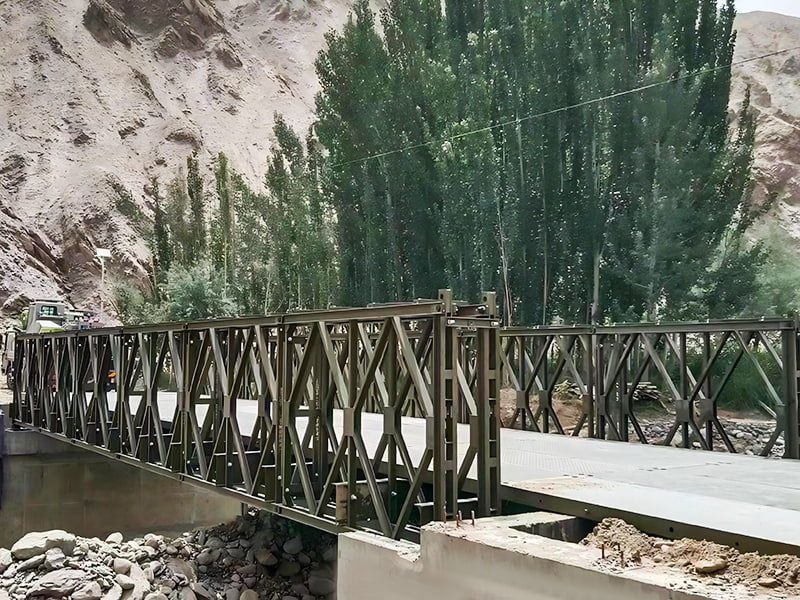
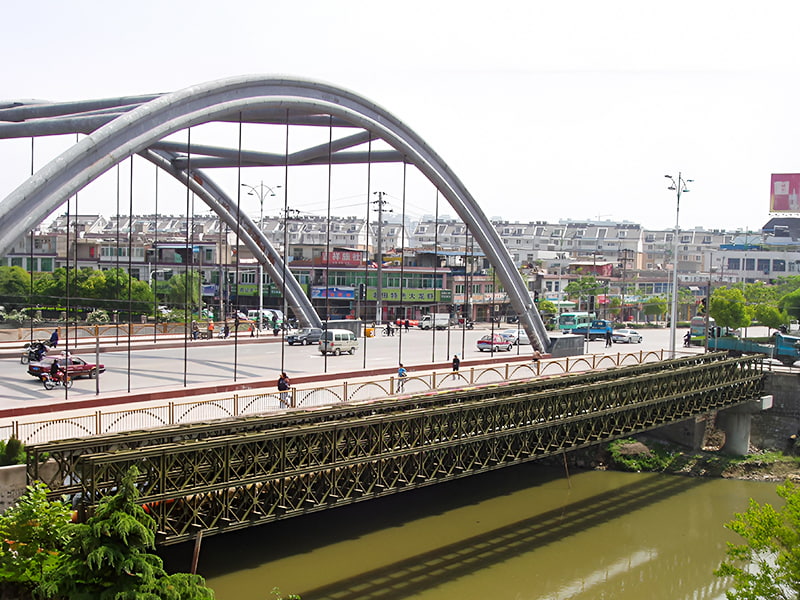
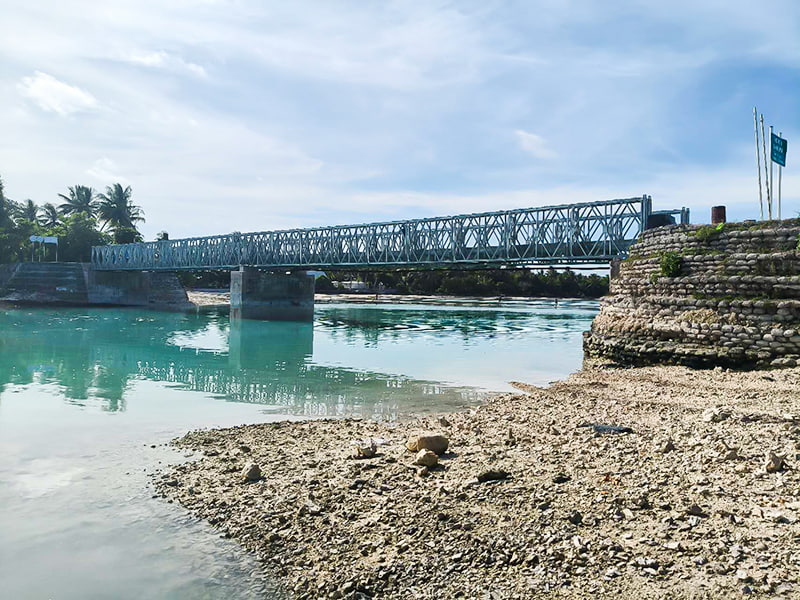
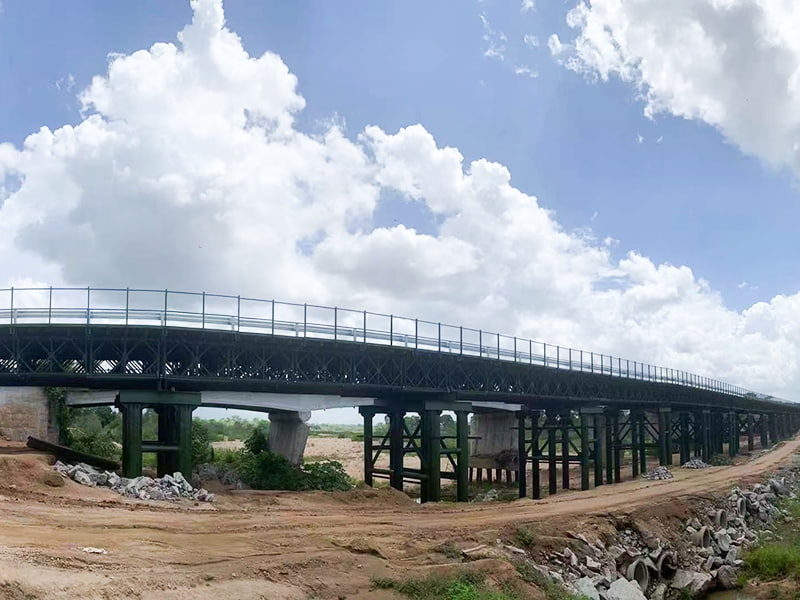
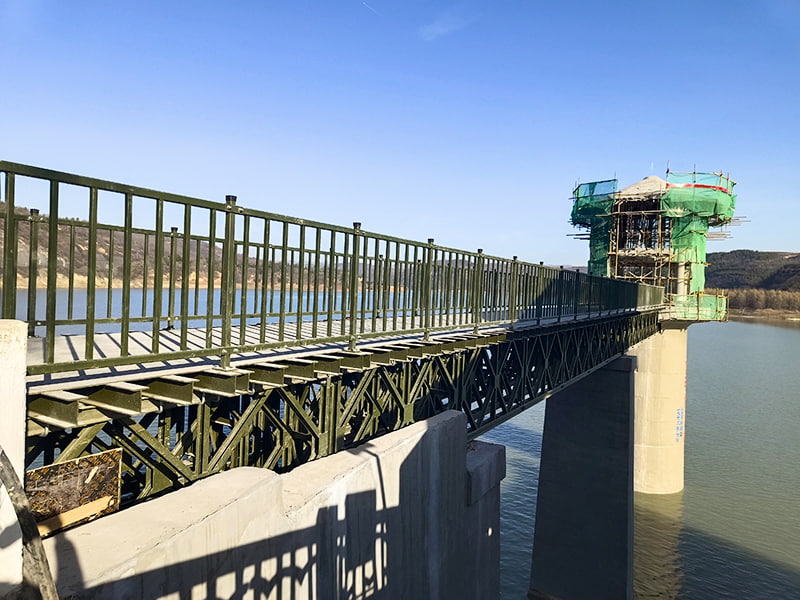
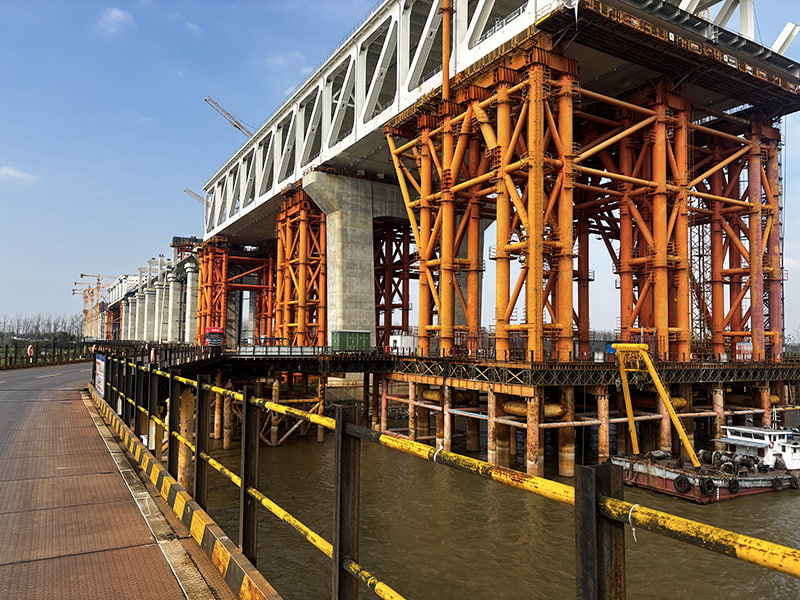
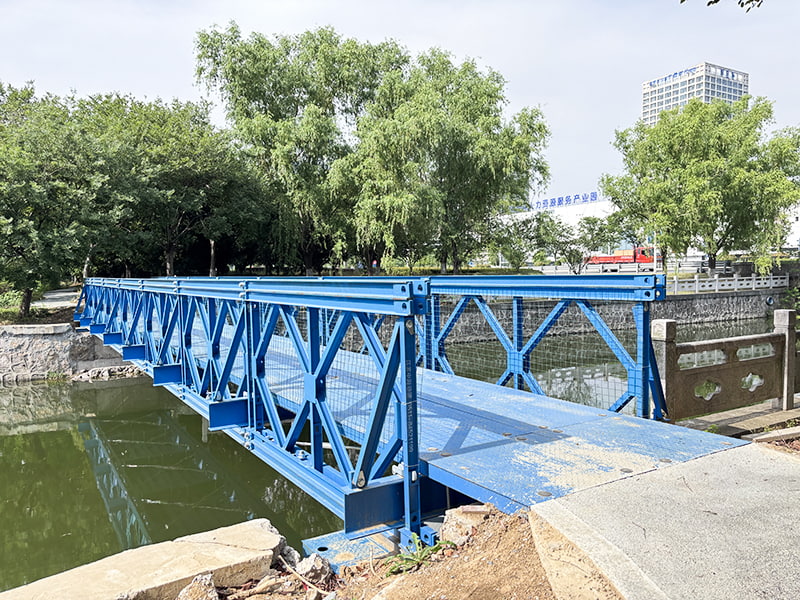
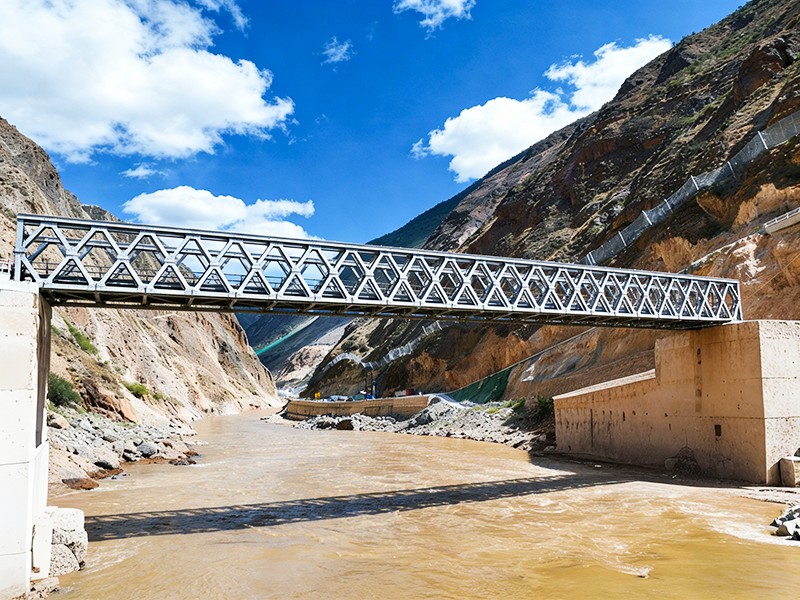
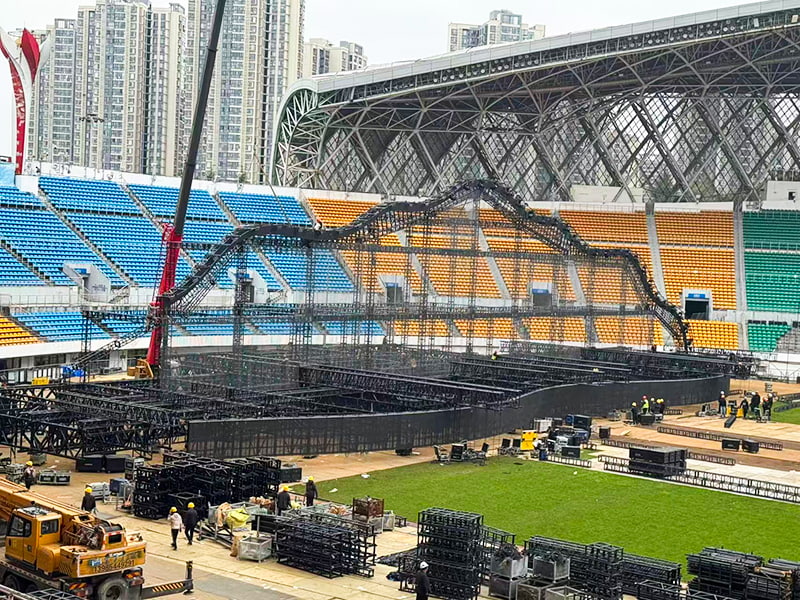
Bailey construction support systems are the modular steel trussed panels that get bolted together on site to carry weight where a permanent structure isn't ready to do it yet — under a bridge deck mid-pour, across a gap where a launching nose needs a track, or beneath heavy plant working near soft ground. Bailey Construction Support covers a fairly wide range of use cases, from single-panel falsework runs to multi-tier configurations rated for crane crawler loads, and the same panel geometry that made Bailey bridging practical for wartime river crossings now does ordinary duty on construction sites: staging, bracing, temporary decking, and load transfer around excavations. Understanding how these systems are configured, loaded, and inspected matters more than most people expect once a project's schedule depends on them holding up.
Jiangsu Zhonghai Bridge Equipment Co., Ltd sees the same handful of deployment patterns repeat across projects: launching gantry support during incremental bridge erection, falsework beneath concrete pours, bracing inside cofferdams, temporary crane access platforms over soft or uneven ground, and short-span pedestrian or plant access bridging while permanent structures are under construction. Each of these puts a different kind of demand on the panel — sustained dead load under a pour, cyclic load under crane travel, or lateral pressure inside a cofferdam — which is why configuration selection isn't a one-size-fits-all decision.
The chart below gives a general sense of how capacity typically scales with configuration for a fixed reference span, and how site usage tends to split across these applications.
The naming convention — single, double, or triple truss, paired with single or double chord — describes how many panel layers are stacked and pinned together. Adding a layer raises capacity, but it also adds steel weight, assembly time, and crane picks, so the practical decision is usually about matching the lightest configuration that still clears the span and load with margin to spare, rather than defaulting to the heaviest option available. Bailey Construction Support panels follow this same trade-off logic: capacity for a given configuration drops as span increases, because deflection and bending moment both grow with span length while the cross-section stays fixed.
The line below illustrates that relationship in general terms — how much of a configuration's rated capacity typically remains usable as span stretches out, assuming no change in truss layering.
In practice this is why an engineer will step a layout up from single-single to double-double rather than stretch a lighter configuration past the point where deflection becomes the limiting factor instead of strength.
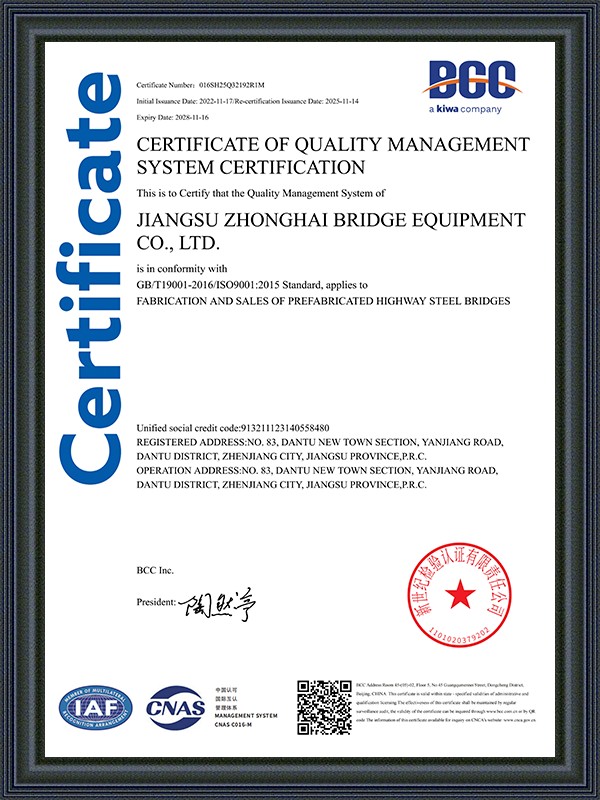
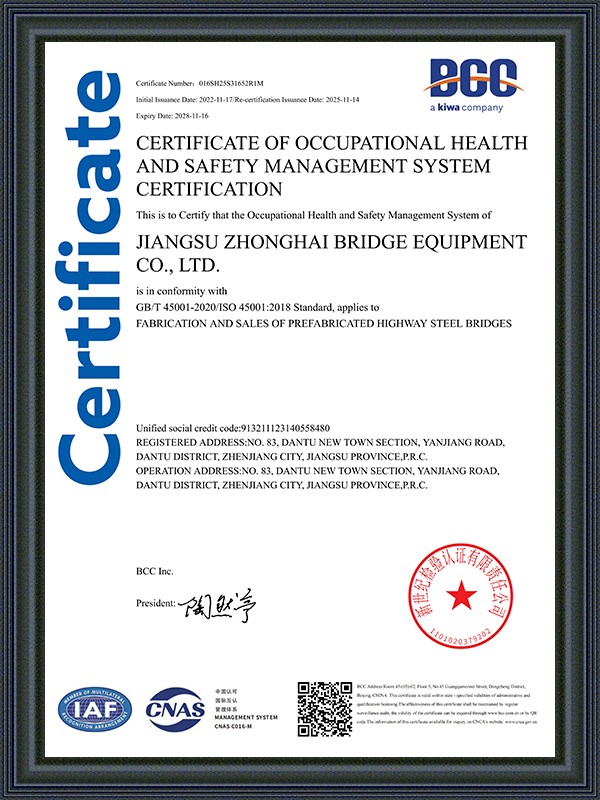
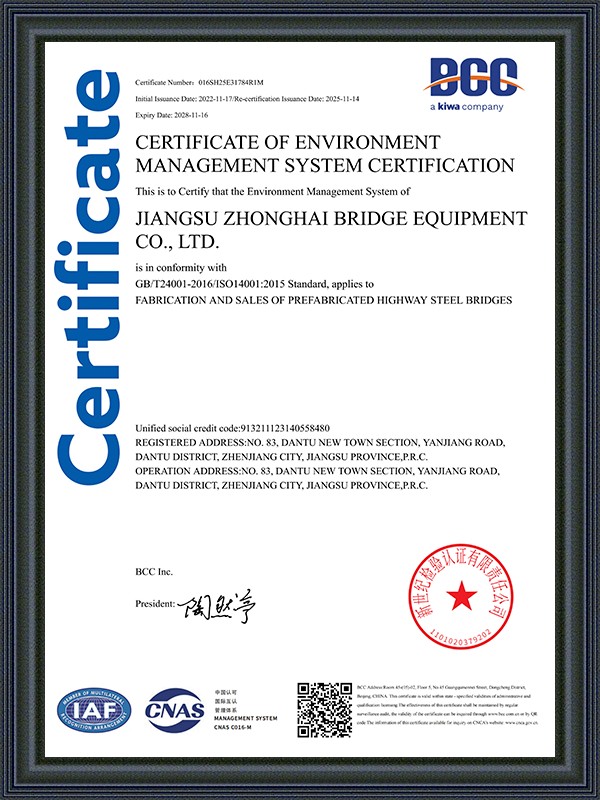
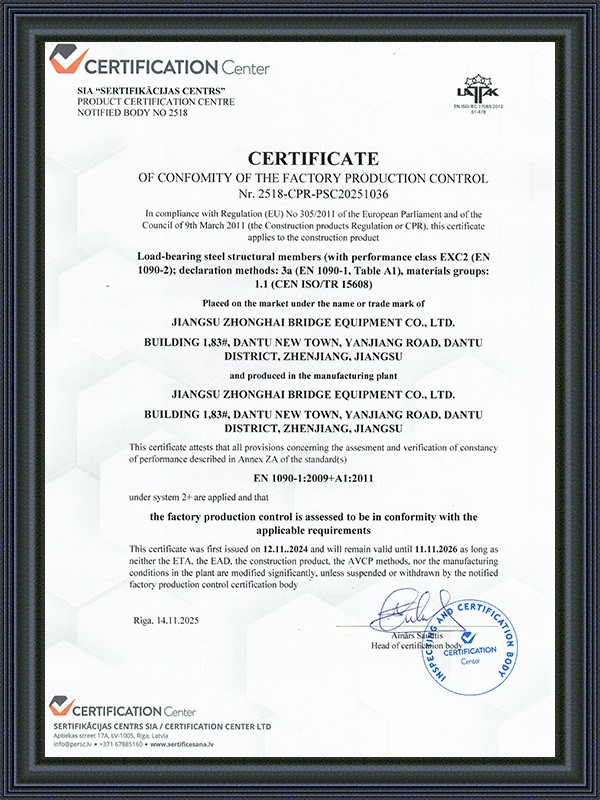
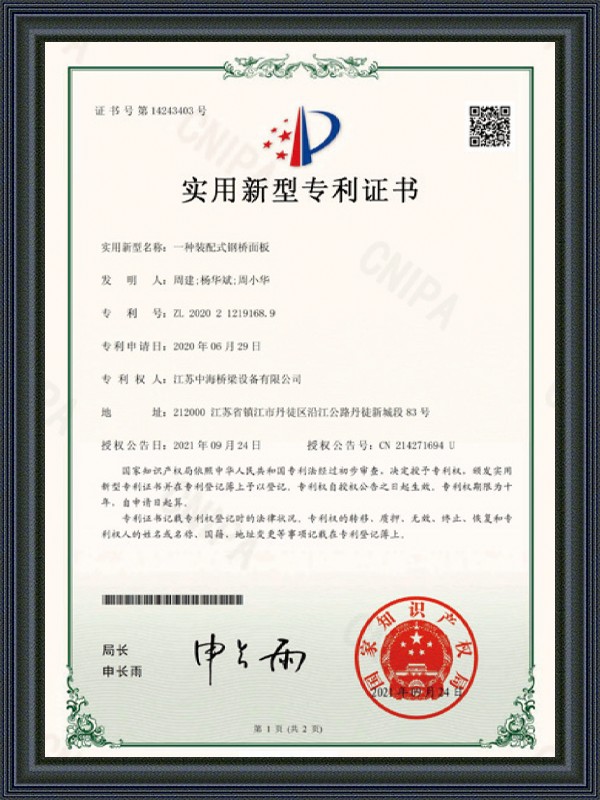
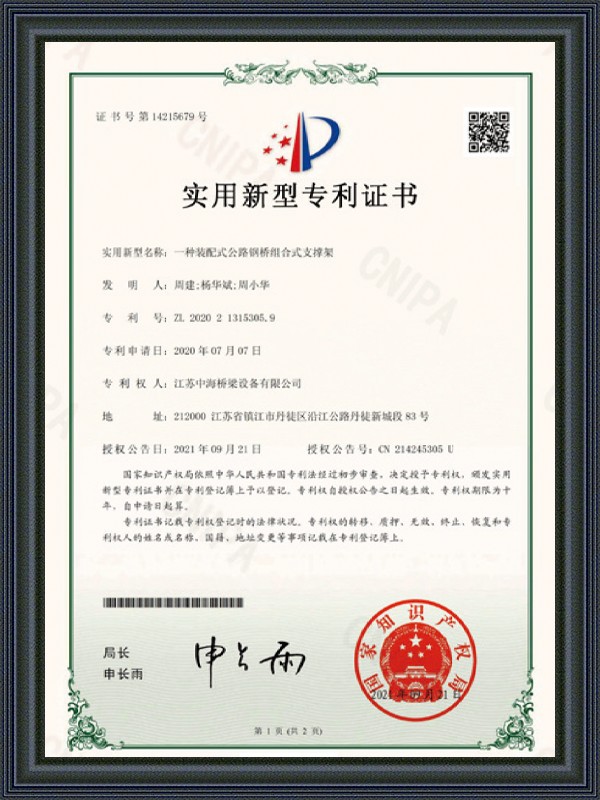
A Bailey panel only performs the way its rating suggests if the base steel, the welds, and the pin-hole dimensions all match spec — a panel that looks identical on the outside can behave very differently under load if any of those three are off. This is the part of the process Jiangsu Zhonghai Bridge Equipment Co., Ltd treats as non-negotiable: from raw material certification through to final assembly inspection, every component leaving the factory is checked against material, welding, and structural performance benchmarks in a closed-loop quality governance system, built to hold up under extreme climatic, hydrological, or load conditions rather than just under ideal test-bench conditions.
That level of validation is what clients ask for when a project needs international compliance, third-party certification, or engineering-grade traceability — the kind of documentation trail that infrastructure procurement typically requires. The radar below reflects how coverage is distributed across the main checkpoints in that process.
Why It Matters:
Most complaints about support panels in the field trace back to one of a small number of fabrication-stage causes, which is exactly why Jiangsu Zhonghai Bridge Equipment Co., Ltd runs inspection at each of those stages rather than only at the end of the line. The table below maps typical field issues back to where they usually originate.
| Field Issue | Likely Root Cause | Where It's Usually Caught |
|---|---|---|
| Pin-hole misalignment during assembly | Dimensional drift during panel fabrication | Final assembly inspection |
| Weld cracking under repeated loading | Incomplete fusion or unsuitable filler material | Weld inspection stage |
| Panel deformation after sustained loading | Inconsistent steel grade or hardness | Raw material certification |
| Premature corrosion at joints | Coating or material spec mismatch for site conditions | Material certification & performance check |
It depends entirely on configuration and span rather than a single fixed number — a single-single layer over a short reference span sits well below a triple-double layer over the same span, as shown in the capacity chart above. Span length, load type (static versus cyclic), and site conditions all shift the usable rating.
Capacity is set by the number of truss layers and chords, the panel spacing, and the span length together — stretching a lighter configuration across a longer span reduces the retained capacity, which is why longer spans typically call for a heavier configuration rather than the same one pushed further.
Every component goes through material certification, weld inspection, dimensional checks, and a final assembly review before it clears the factory — this is the closed-loop process Jiangsu Zhonghai Bridge Equipment Co., Ltd runs on every unit, not a sampling-based spot check.
Yes — extreme climatic, hydrological, or sustained load conditions are exactly what the quality governance process is designed around, since a panel that passes a basic strength test can still underperform over years of exposure if material and weld quality weren't validated for those conditions from the start.

Product Category
Bailey Bridge/Modular Bridge Modular Steel Bridge Pedestrian Bridge Modular Pipe Bridge Truss Bridge Steel StructureContact Us


Copyright © Jiangsu Zhonghai Bridge Equipment Co., Ltd. All
Rights
Reserved
OEM Bailey Construction Support Supplier
Custom Bailey Construction Support Factory
