
 English
  русский
  Español
  Português
 Call us
+86-511-84522866

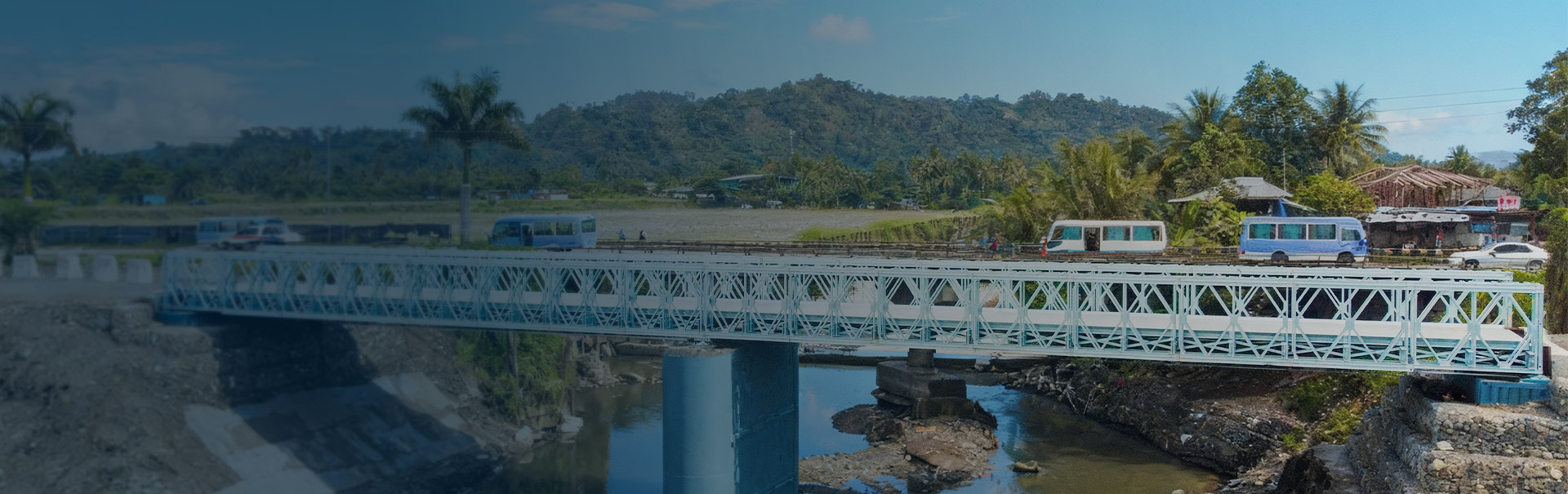
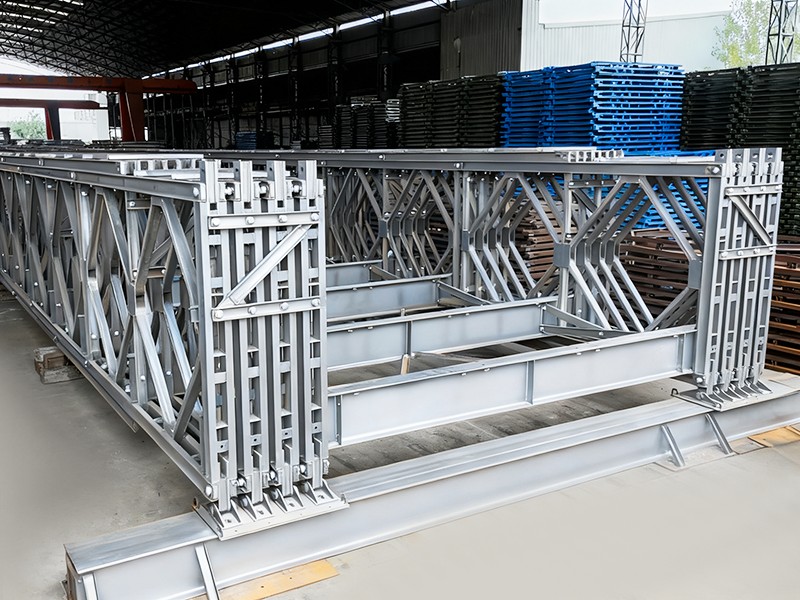

The CB 450 Bailey Bridge, independently developed by Jiangsu Zhonghai Bridge, is a modular steel bridge specifically designed for large-span, heavy-load traffic requirements, capable of meeting permanent or semi-permanent use scenarios. The product utilizes standardized component design, balancing structural strength with rapid assembly capability, enabling it to perform excellently in various complex application environments. The single-span maximum span of the CB 450 Bailey Bridge can reach up to 81 meters, with a load-bearing capacity of up to 80 tons, making it particularly suitable for large-scale transportation, critical infrastructure construction, and special engineering projects. Its design fills the market gap for large-span Bailey bridges, breaking through the limitations of traditional bridges in terms of span and load capacity, providing a new solution for constructing ultra-wide-span bridges.
A TRUSTED MANUFACTURER OF MODULAR STEEL BRIDGES




 ZHONGHAI BRIDGES









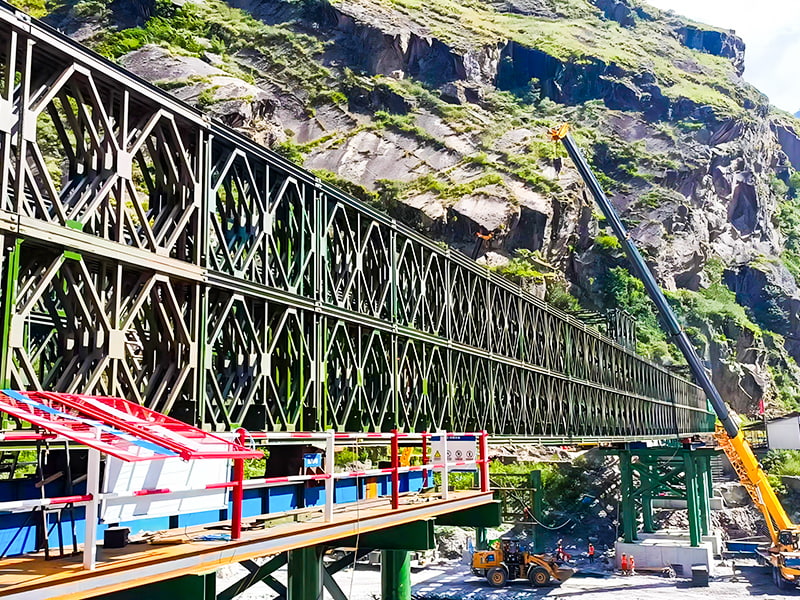
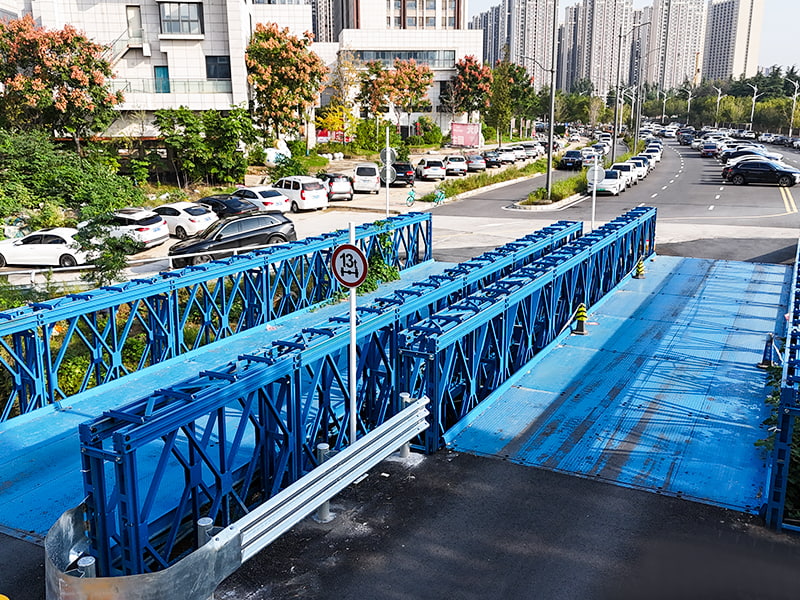
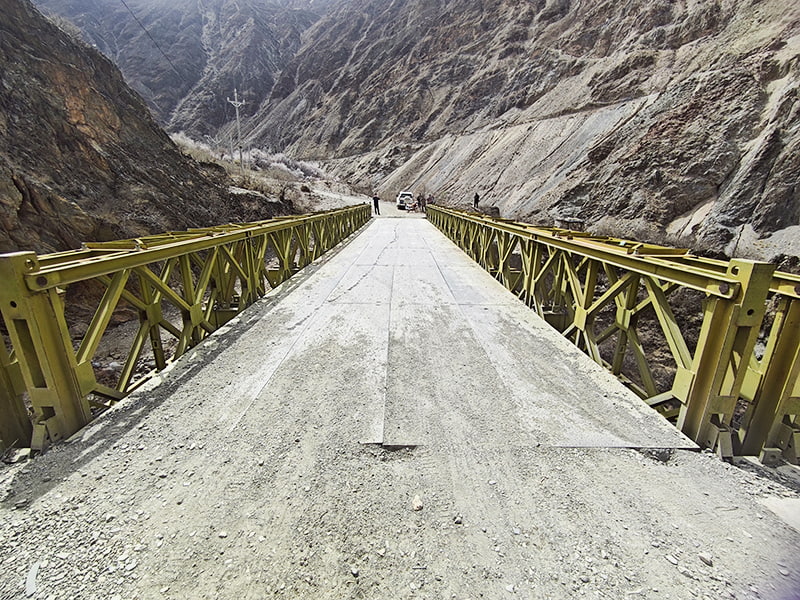
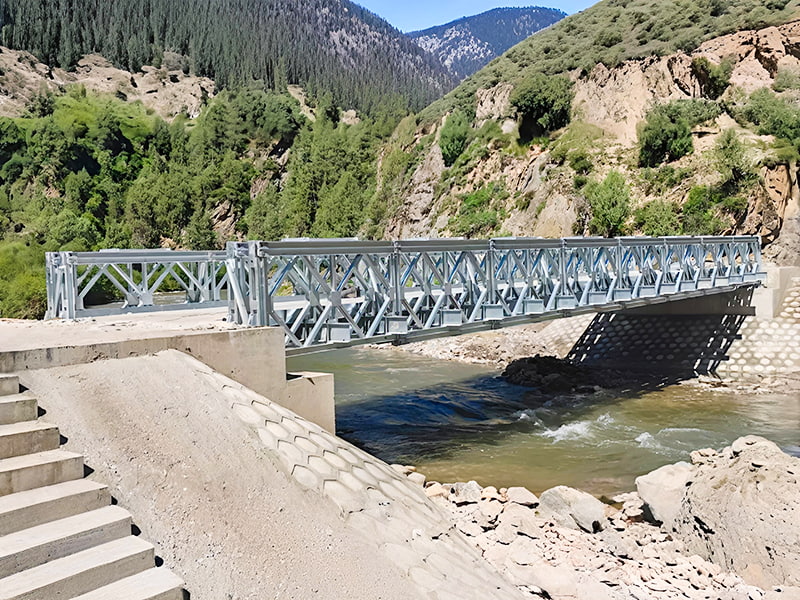
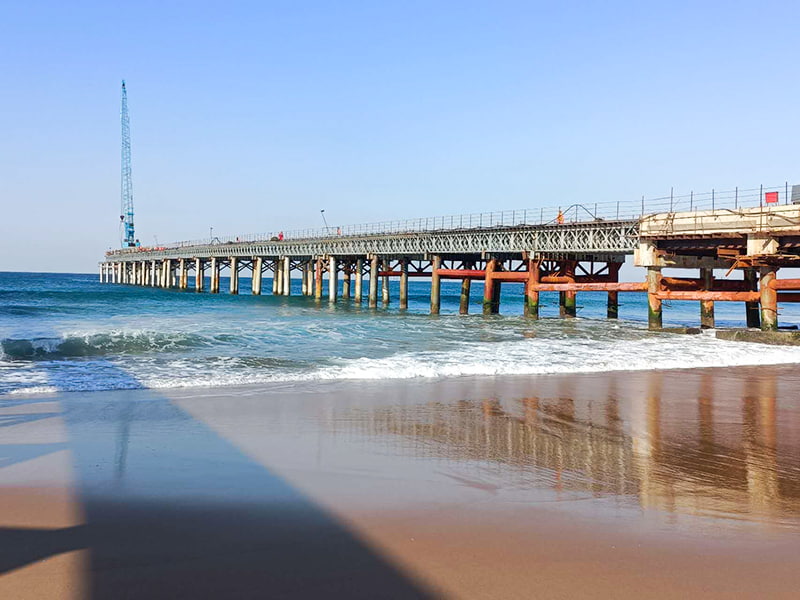
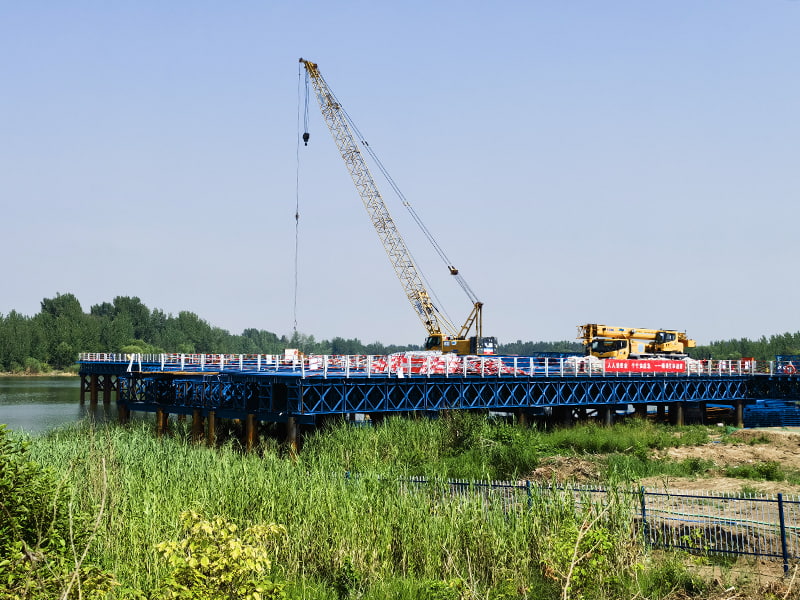
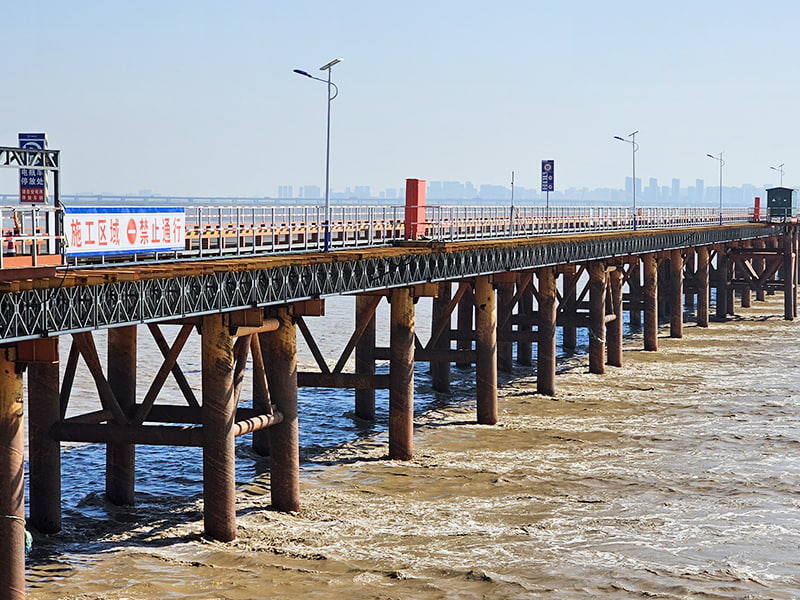
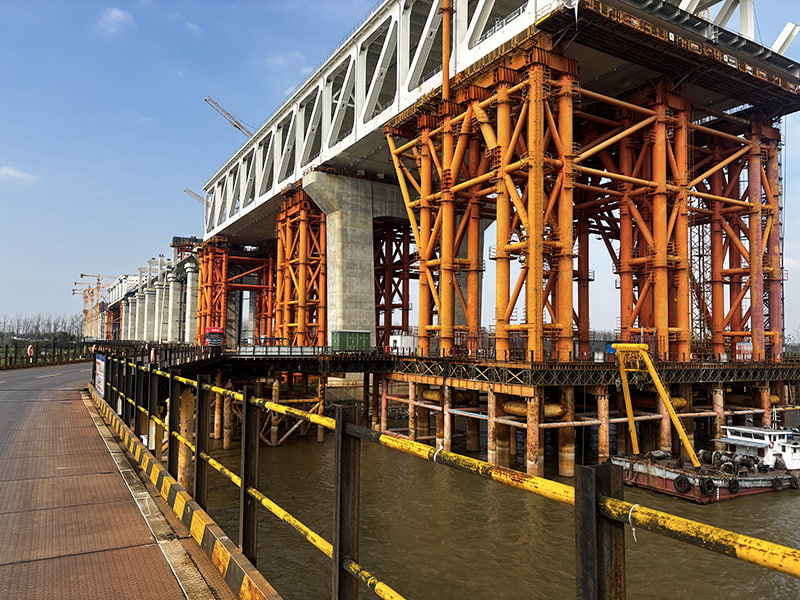
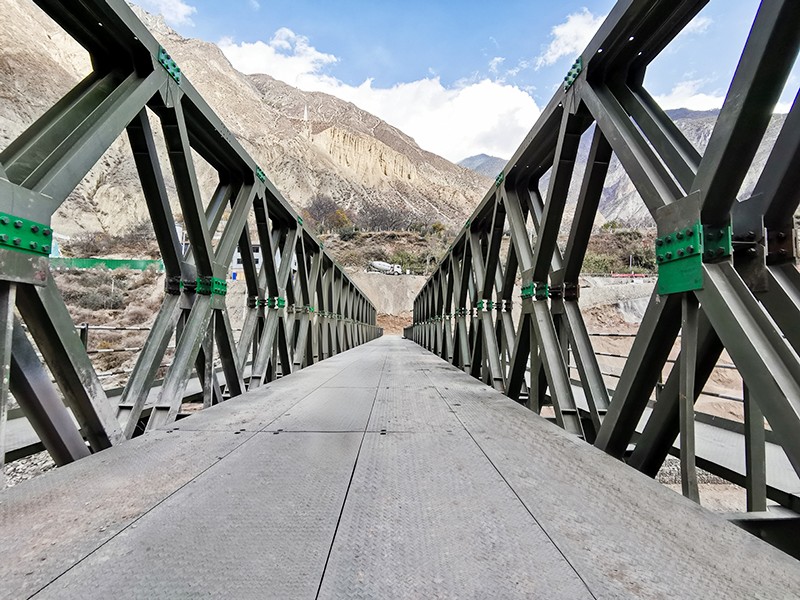
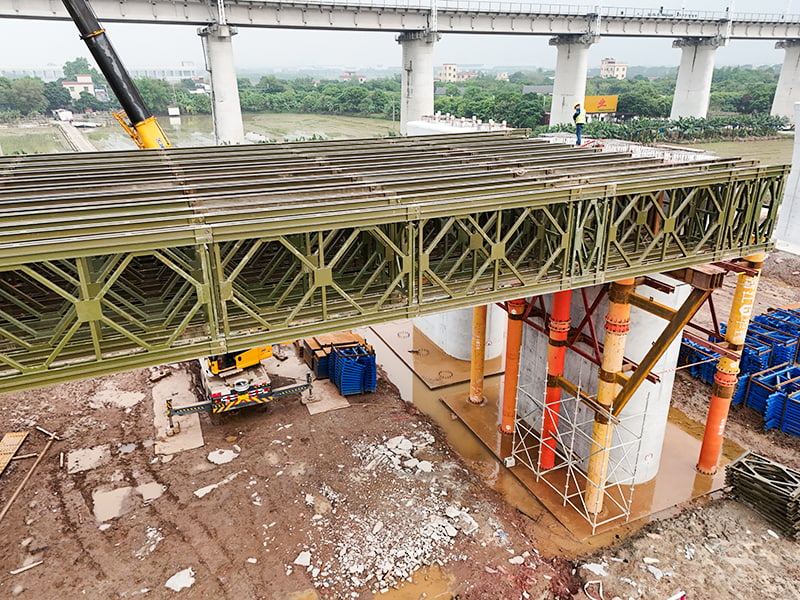
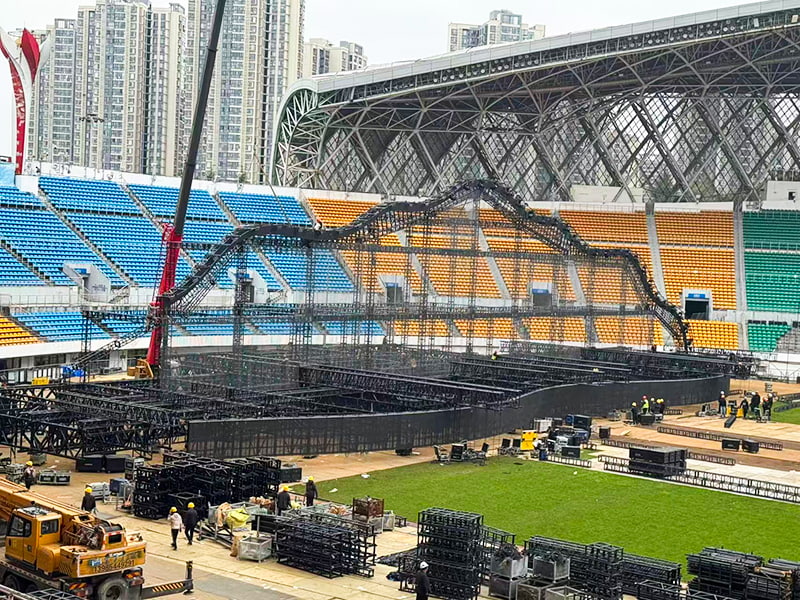
Long-span steel truss bridging sits at the center of emergency logistics, disaster recovery, and heavy-route infrastructure work across mountainous, coastal, and industrial regions. Within the panel bridge family, the CB 450 Bailey Bridge occupies the upper end of the range — a reinforced, multi-truss configuration built for wider carriageways, longer continuous spans, and higher single-vehicle loads than lighter compact panel systems. What decides how well a bridge of this class performs over its working life is not only the steel panel design itself, but how consistently the structure is configured for its site, monitored in service, and supported when field conditions turn urgent.
A CB 450 structure is typically built around a K-shaped main truss rather than the simpler diagonal bracing used in lighter panel classes. This truss geometry spreads load across a wider network of members, which is part of why the class is chosen over compact panel bridges when a route needs to carry continuous multi-span traffic rather than a single short crossing. In one publicly documented CB 450 deployment, a two-support layout combining a 76.5-meter and a 40.5-meter section reached a total continuous length of 117 meters while carrying a rated single-vehicle load of 55 tons, with a 4.2-meter carriageway and a one-meter sidewalk on each side — a scale that illustrates why this class is favored for permanent or semi-permanent highway crossings rather than short tactical gaps (source: steelbaileybridges.com project case study).
As a manufacturer producing panel bridge systems including the CB 450 Bailey Bridge, Jiangsu Zhonghai Bridge Equipment Co., Ltd works with the same underlying truss logic: axis spacing, internode length, and chord sizing are set together, not chosen independently, because each one changes how load moves through the panel joints under a moving vehicle.
| Parameter | Typical Value |
|---|---|
| Main truss axis spacing | 5.366 m |
| Internode length | 2.25 m |
| Cross-beam spacing | 4.5 m |
| Chord length | 6.75 m or 9 m |
| Carriageway width | 4.2 m |
A CB 450 structure rarely sits in one type of environment for its entire service life, and the failure modes that actually threaten a panel bridge change with climate and use pattern. Fatigue cracking at pin joints behaves differently under repeated freeze-thaw cycling than under constant salt exposure, and a bridge assembled and disassembled repeatedly for emergency use wears in ways a fixed highway crossing never does. Jiangsu Zhonghai Bridge Equipment Co., Ltd builds preventive maintenance planning around that reality, tailoring the inspection focus to where and how the bridge is actually being used:
This kind of environment-matched planning is what turns preventive maintenance from a generic checklist into something that actually reduces downtime, catches structural issues before they become major repairs, and extends the bridge's usable service life by a meaningful margin.
Bailey-type bridges were originally developed to solve a military logistics problem, and that emergency-response character is still central to how CB 450 structures get used today — in disaster response, rapid reconstruction, and short-notice military crossings. The gap between a bridge that sits unused for weeks after damage and one that is carrying traffic again within days usually comes down to how fast parts, guidance, and technical hands can reach the site.
| Support Activity | Purpose |
|---|---|
| Priority parts dispatch | Moves replacement panels and connectors to the front of the fulfillment queue |
| Remote troubleshooting | Diagnoses assembly or load issues before a technician physically arrives |
| On-site emergency technical support | Puts qualified personnel on the ground for assembly or repair oversight |
| Structural reinforcement kits | Adds capacity to an existing span without a full bridge replacement |
These four activities work together rather than in isolation — dispatch keeps materials moving while troubleshooting narrows down what is actually needed, so a technician arrives with the right plan instead of guessing on site. It is this combination, more than any single service, that Jiangsu Zhonghai Bridge Equipment Co., Ltd points to when clients ask what happens after a CB 450 Bailey Bridge is already in the field and something goes wrong.
The main difference is truss geometry and load path, not just size. A CB 450's K-shaped main truss and wider chord sections are built to carry continuous multi-span traffic and higher single-vehicle loads, which is why it is chosen for permanent or semi-permanent highway crossings rather than short tactical gaps that lighter compact panels can handle on their own.
There is no single fixed interval that fits every site — salt exposure, humidity, and coating condition all change the rate at which corrosion actually progresses. That is why corrosion-rate assessment is treated as its own maintenance track for coastal deployments rather than folded into a generic annual inspection.
Yes. The environment-specific focus — fatigue monitoring, corrosion assessment, inspection frequency, or deck wear evaluation — is matched to how and where the bridge is actually operating, so a plan set at the design stage is normally reviewed and adjusted once real-world conditions and traffic patterns are known.
It generally means qualified personnel present at the site to oversee assembly or repair work directly, working alongside remote troubleshooting and priority parts dispatch so the physical work on the ground is backed by both materials and guidance rather than happening in isolation.
Reinforcement kits are intended for exactly that situation — adding capacity to an existing span without requiring a full bridge replacement, which is typically the faster and lower-disruption option when load requirements increase after initial deployment.

Product Category
Bailey Bridge/Modular Bridge Modular Steel Bridge Pedestrian Bridge Modular Pipe Bridge Truss Bridge Steel StructureContact Us


Copyright © Jiangsu Zhonghai Bridge Equipment Co., Ltd. All
Rights
Reserved
OEM CB 450 Bailey Bridge Supplier
Custom CB 450 Bailey Bridge Factory
