
 English
  русский
  Español
  Português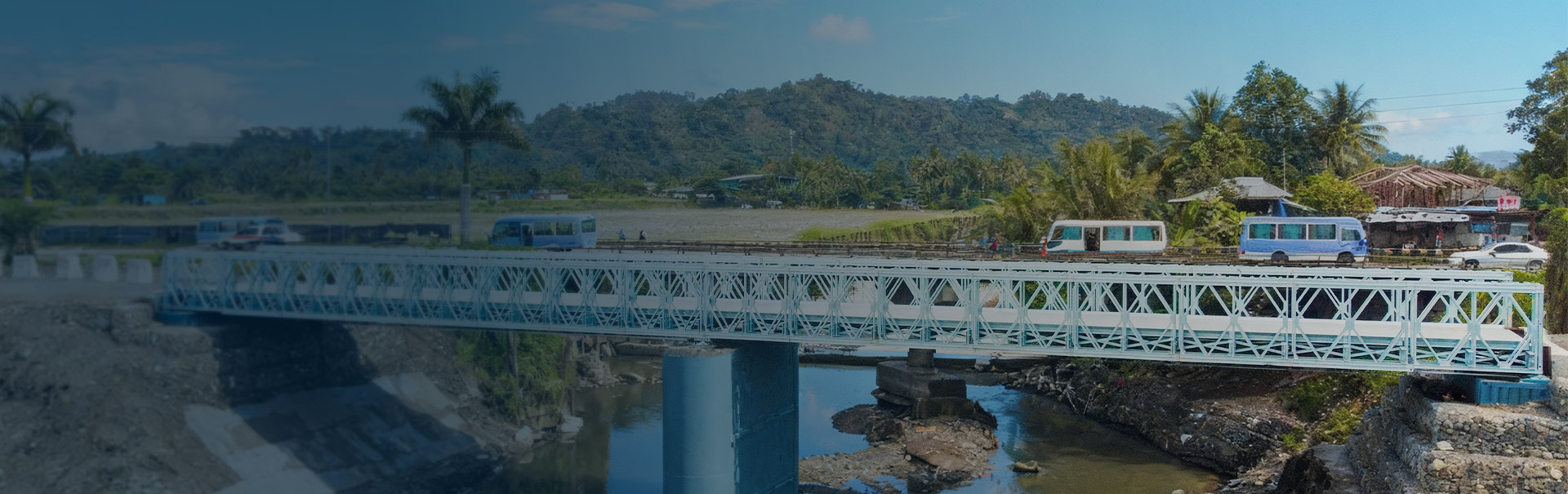
Call us
+86-511-84522866

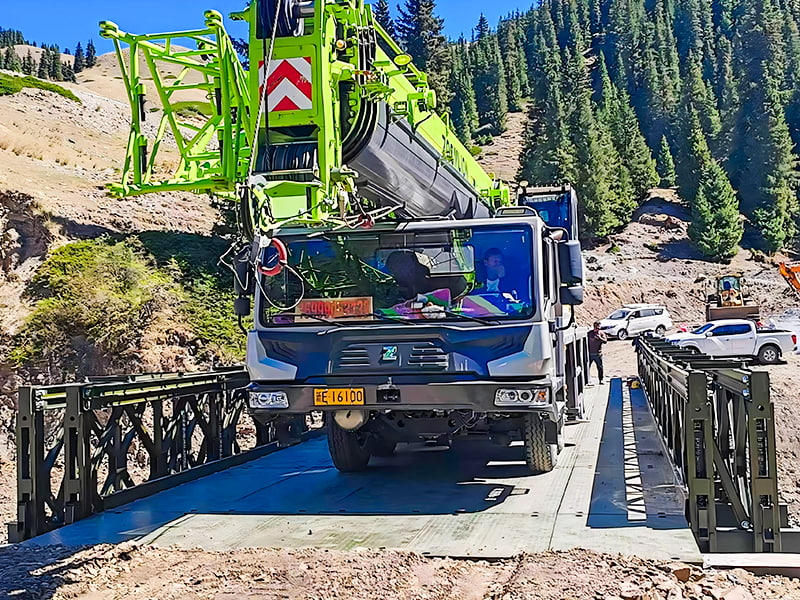

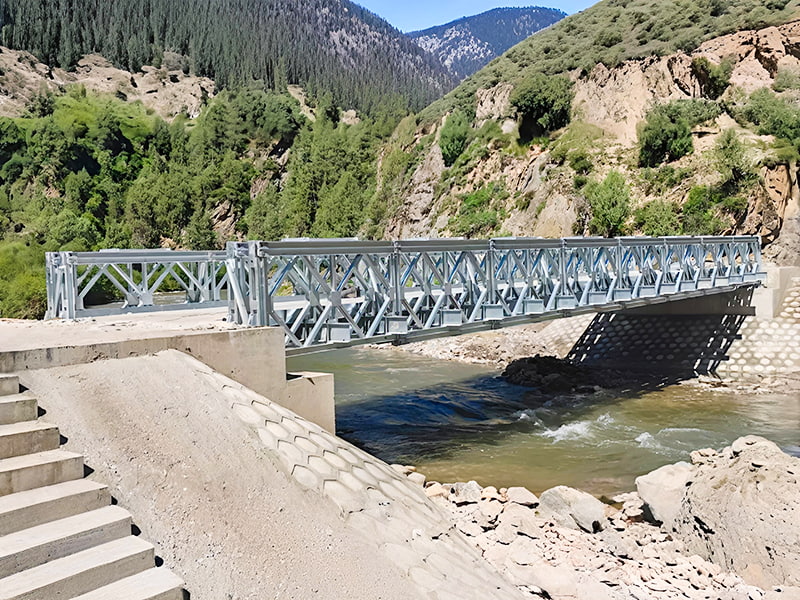
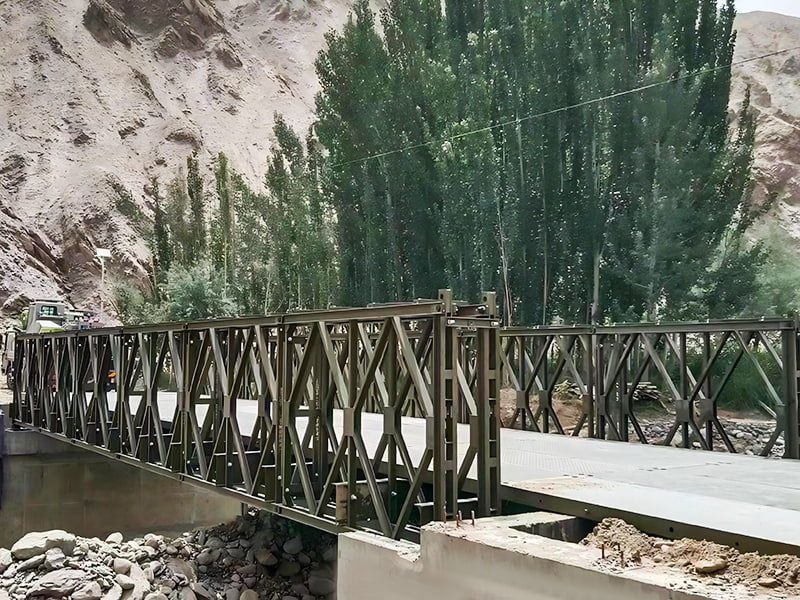
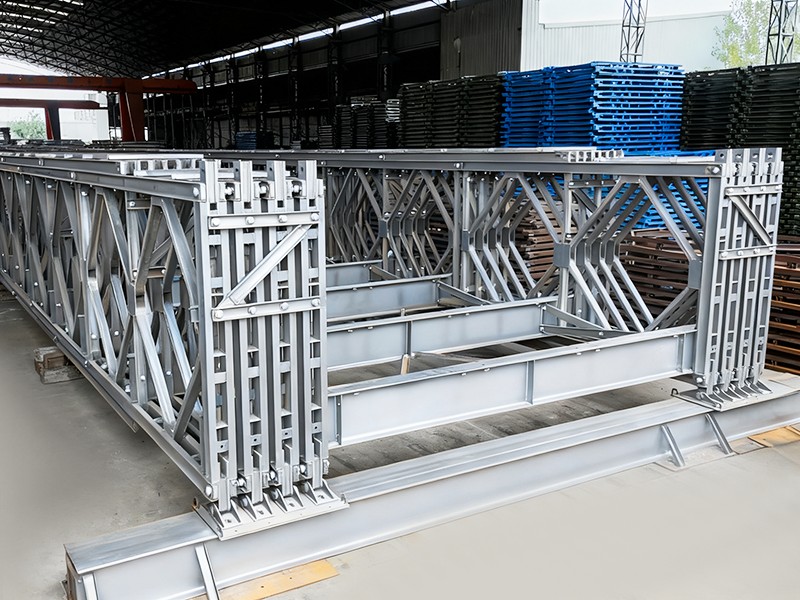
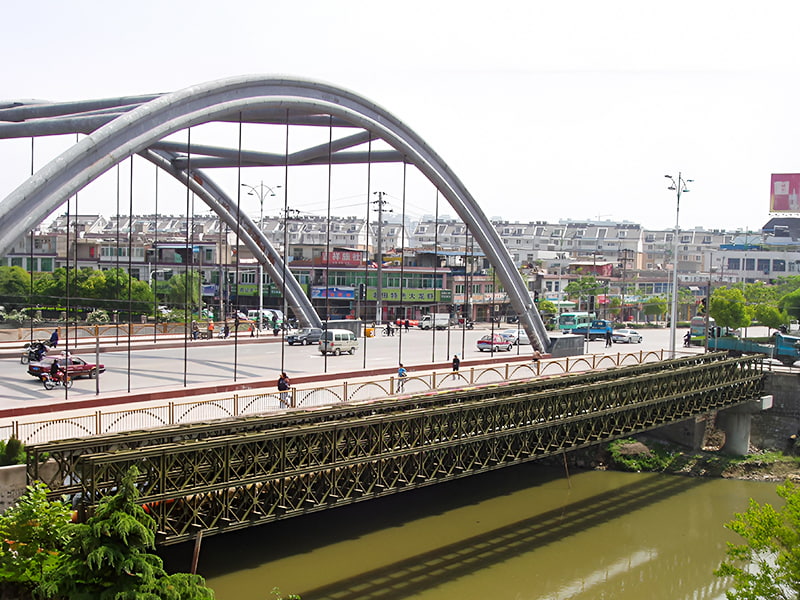
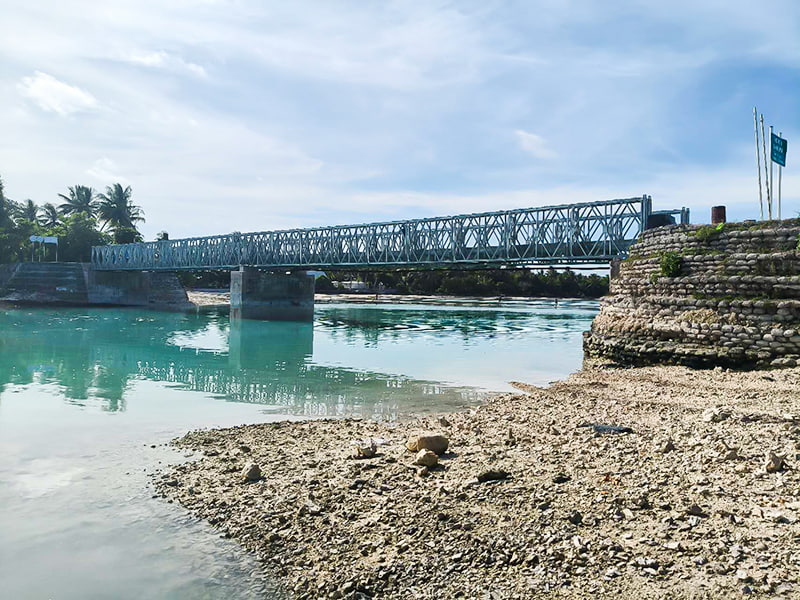
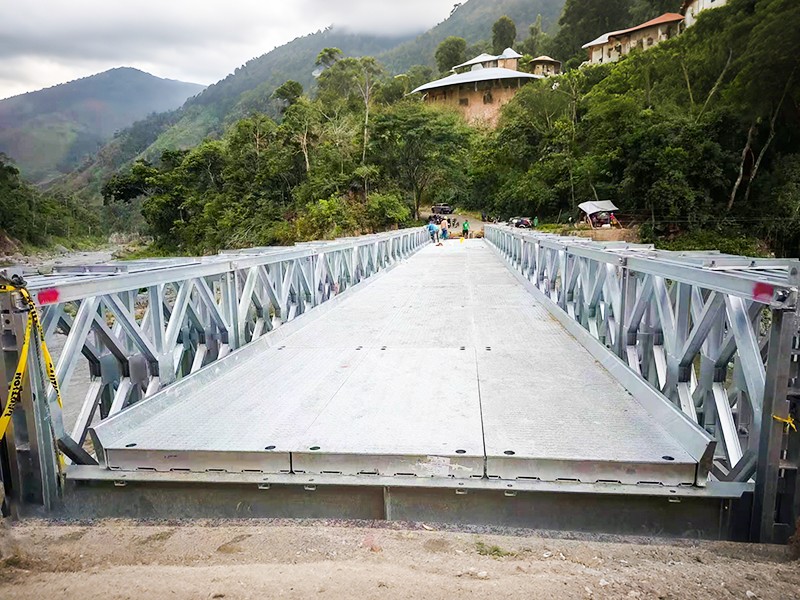
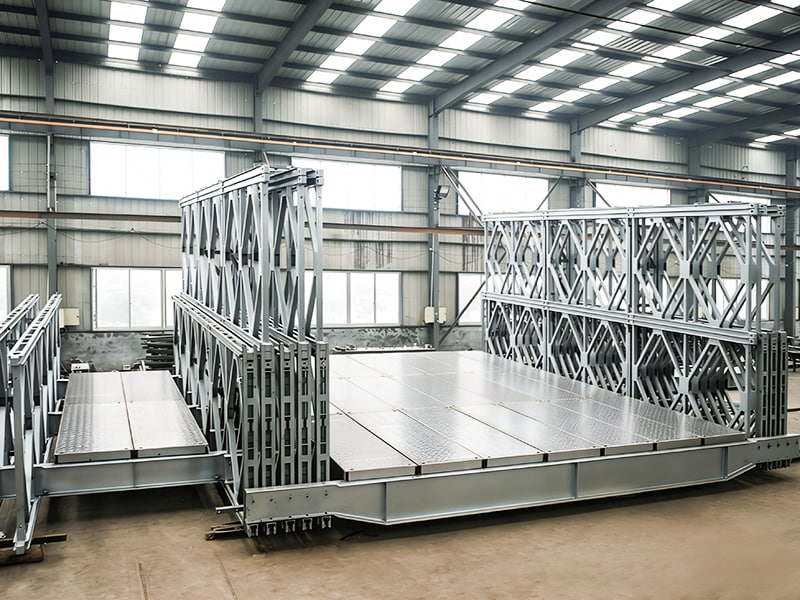
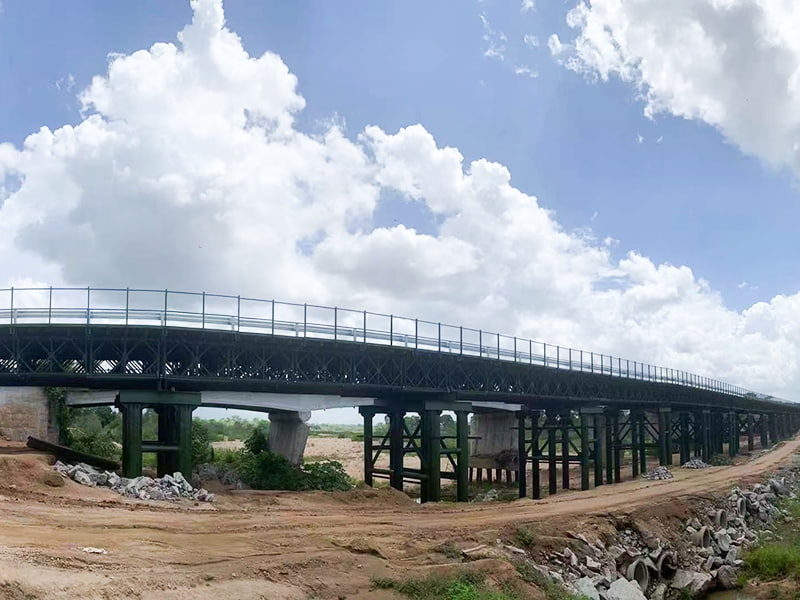
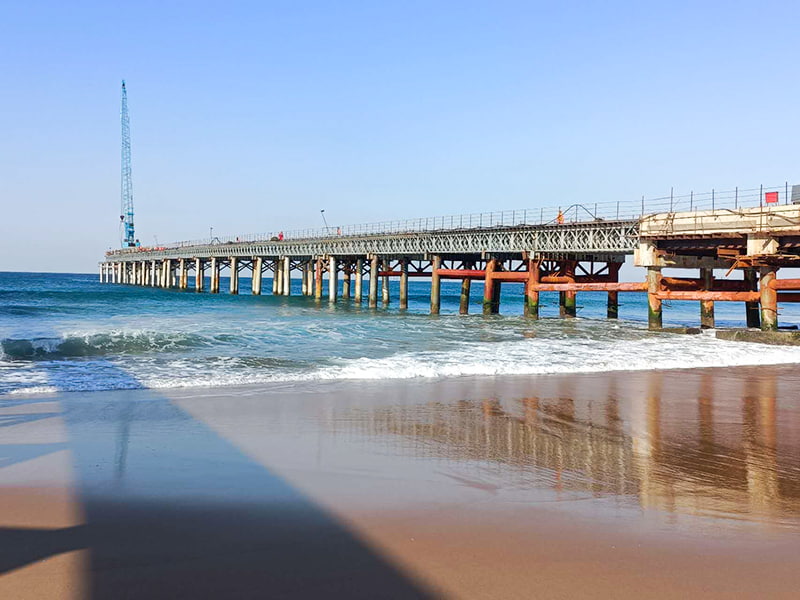
The Bailey Bridge, as a classic modular assembly steel bridge, has been widely applied in fields such as emergency support, transportation engineering, and water conservancy construction, thanks to its simple structure, strong interchangeability, and convenient construction advantages. This type of bridge is not only the preferred solution for temporary or emergency passage but can also be used as a semi-permanent or even permanent bridge through reasonable design and reinforcement, offering high engineering practicality.
The core advantages of the Bailey Bridge are as follows:
1. Modular and portable, with efficient assembly
2. Highly adaptable, suitable for various scenarios
3. Reliable and durable, with high cost-effectiveness
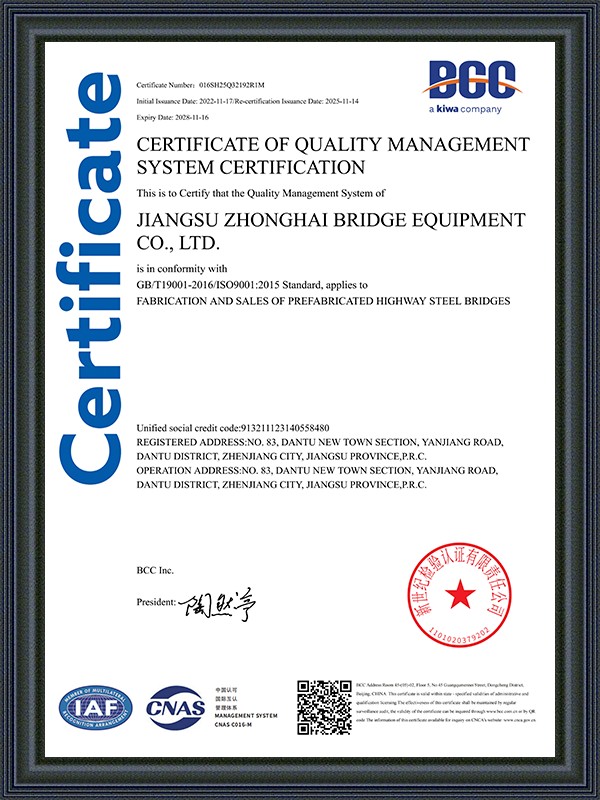
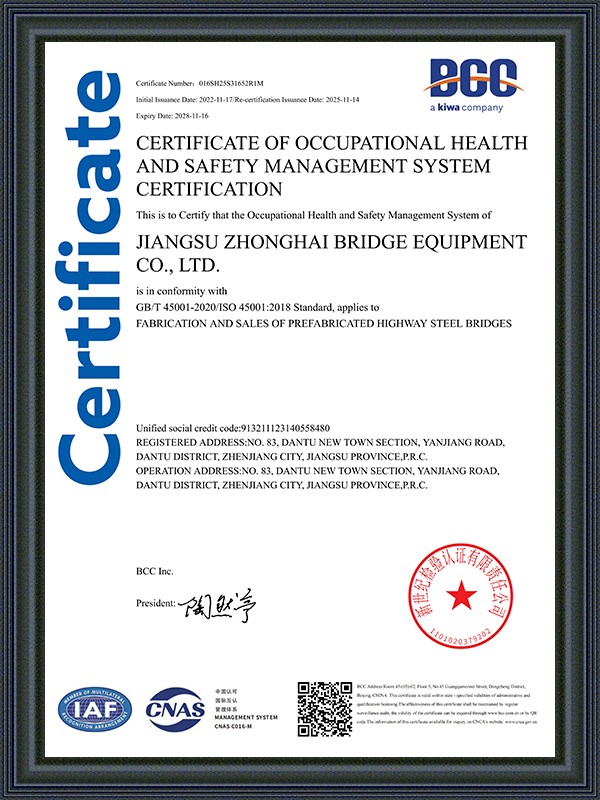
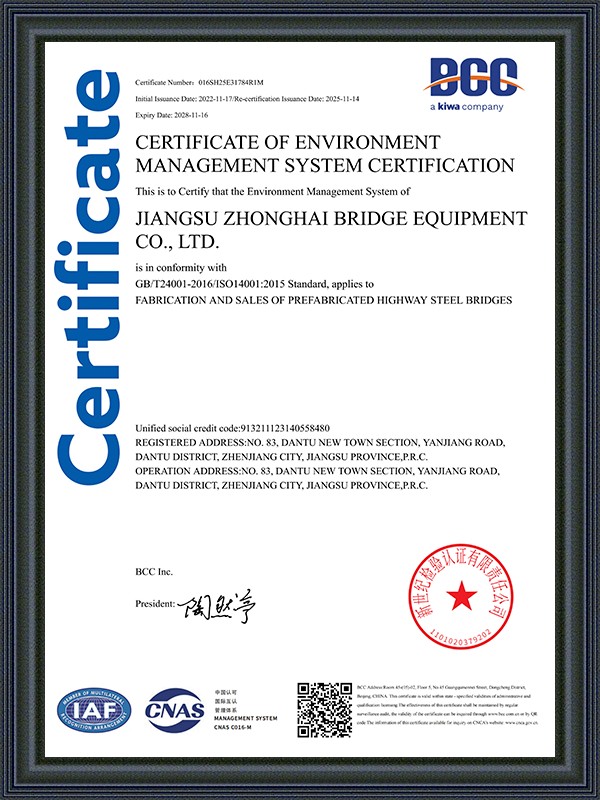
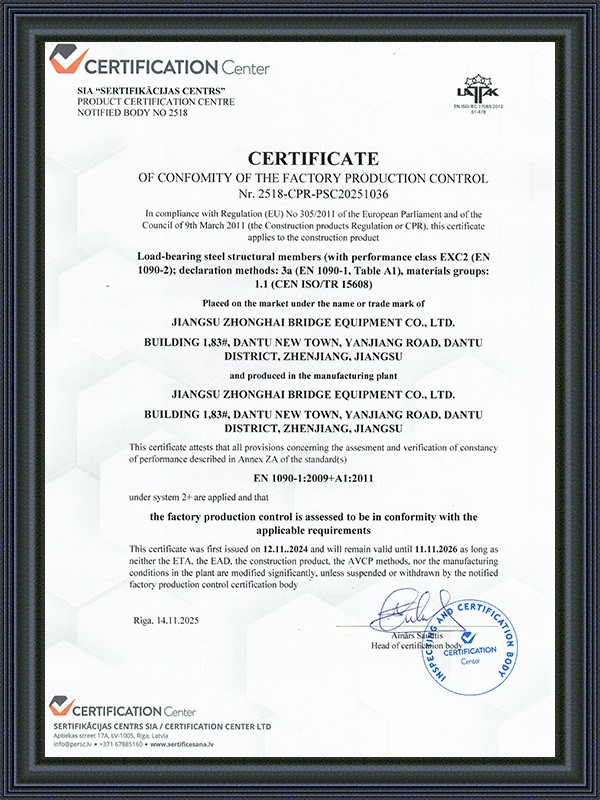
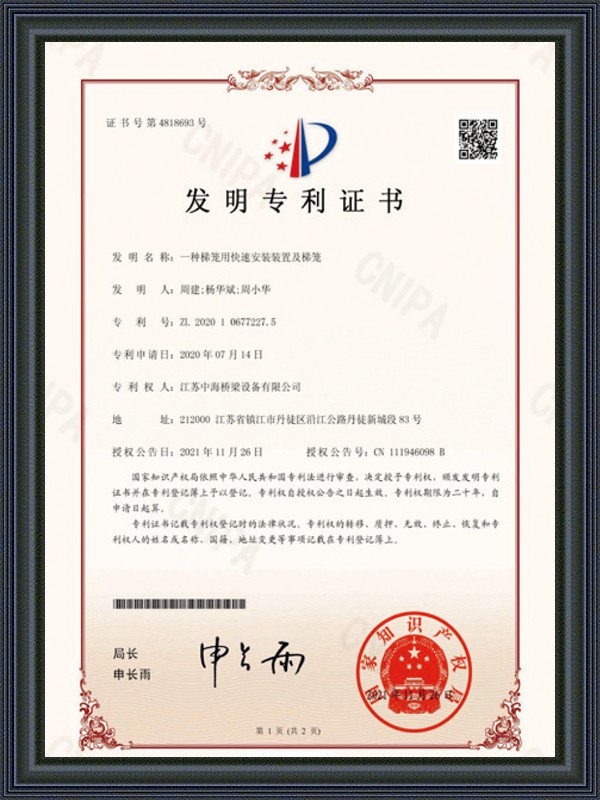
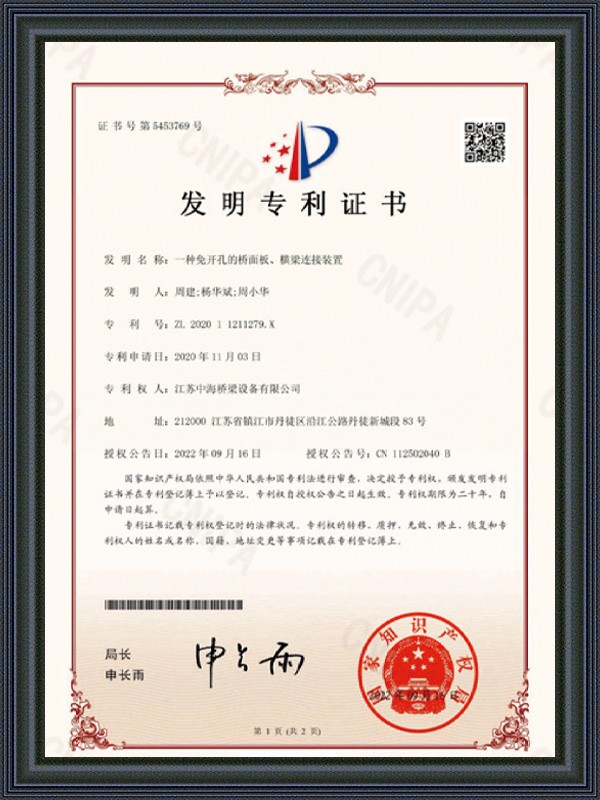
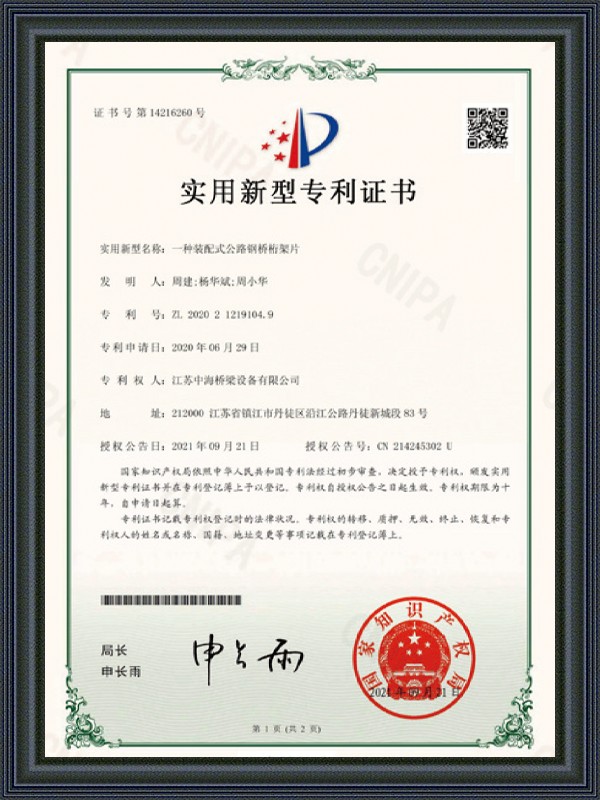
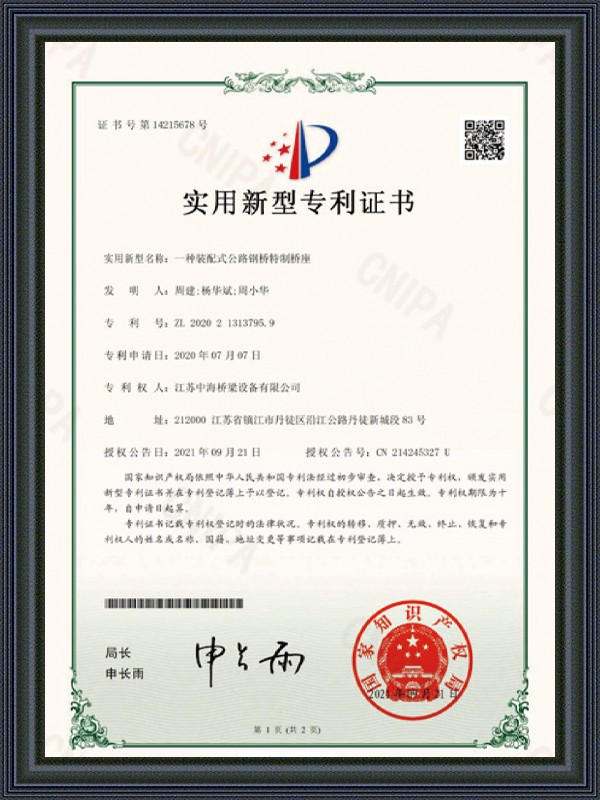
Jiangsu Zhonghai Bridge Equipment Co., Ltd.'s Bailey Bridge, relying on fully automated welding production lines and millimeter-level precision control, has passed authoritative certifications such as SGS and TUV, ensuring stable quality. The company provides a full-chain service from survey design, production, and manufacturing to installation and operation maintenance, supporting customization to national standards (GB), American standards (ANSI), and European standards (EN).
A TRUSTED MANUFACTURER OF MODULAR STEEL BRIDGES



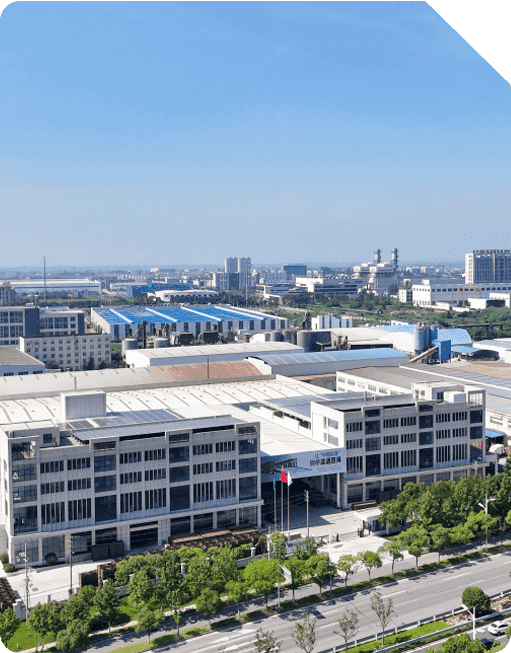
 ZHONGHAI BRIDGES
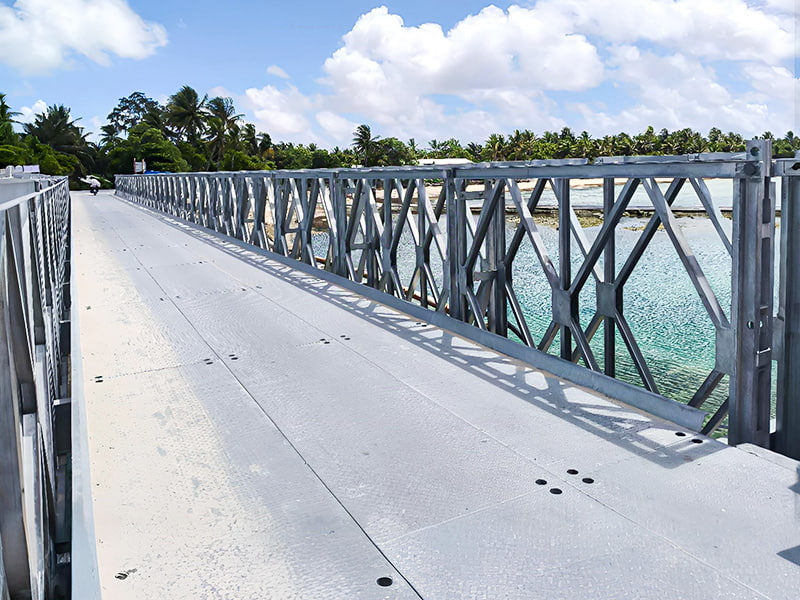
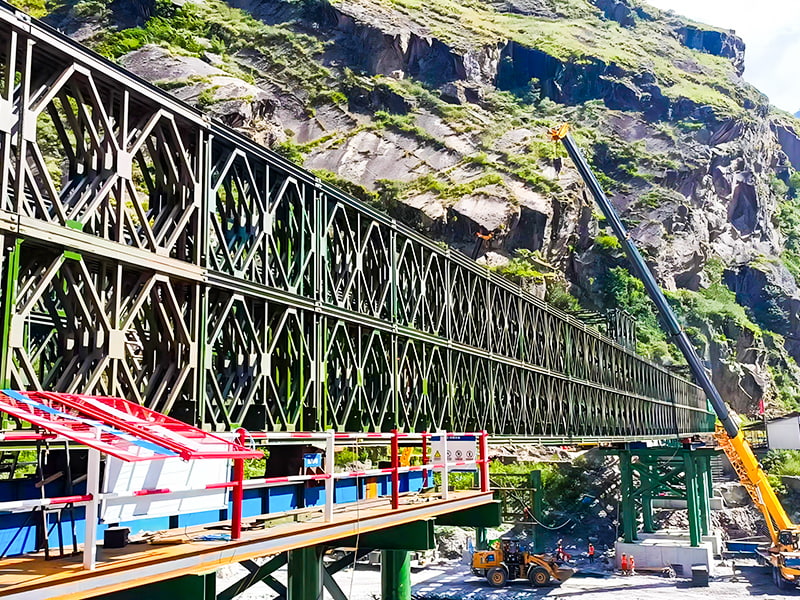
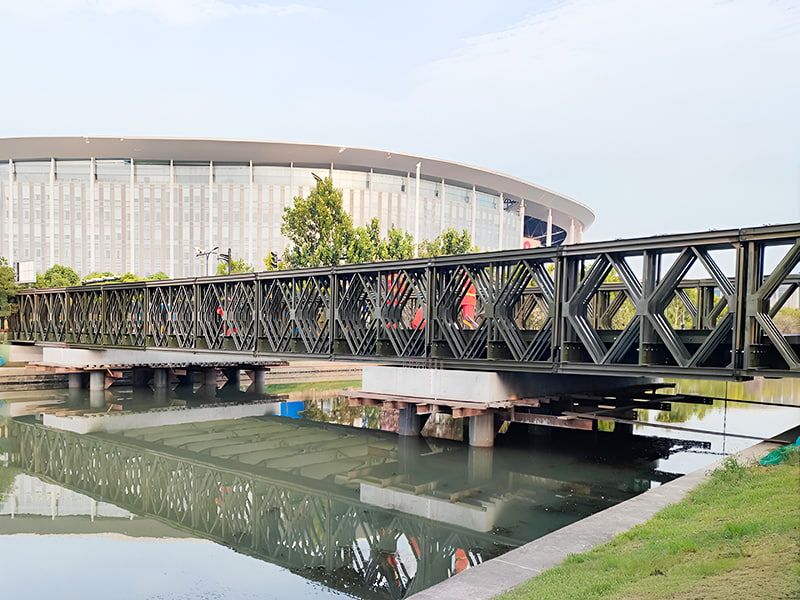
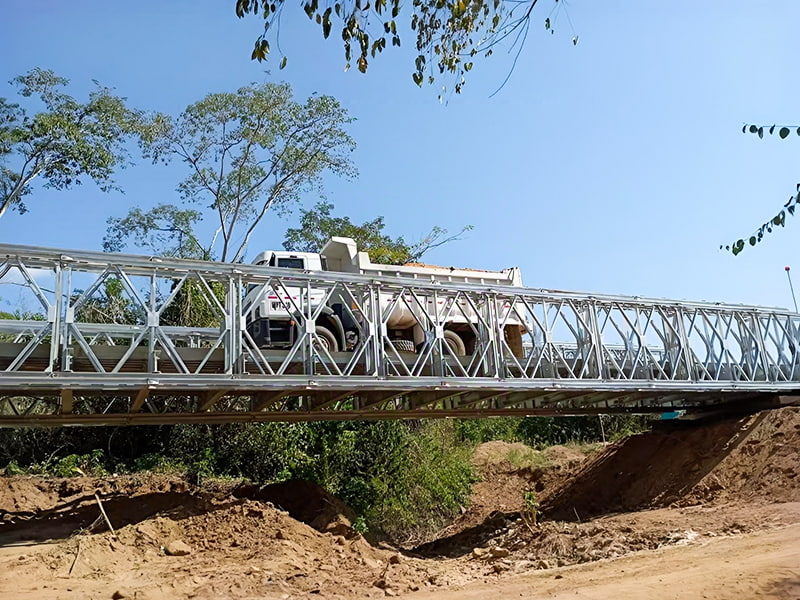
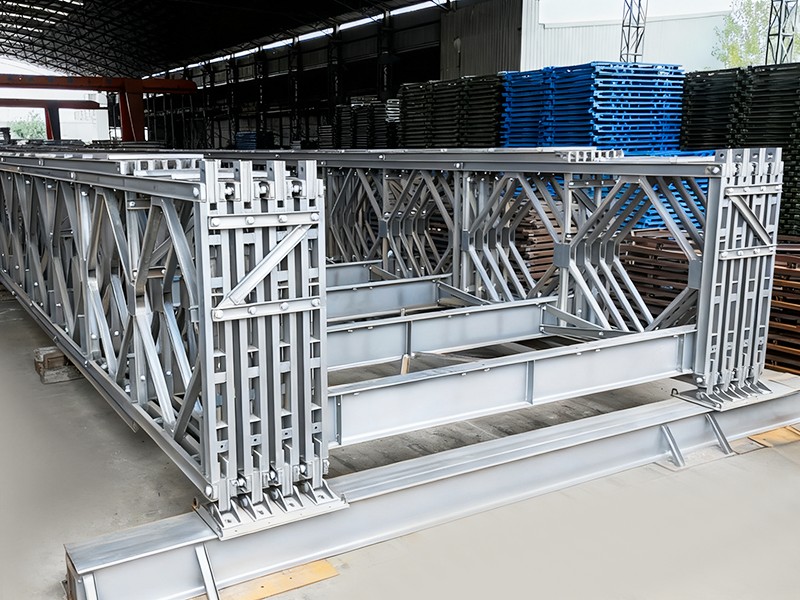
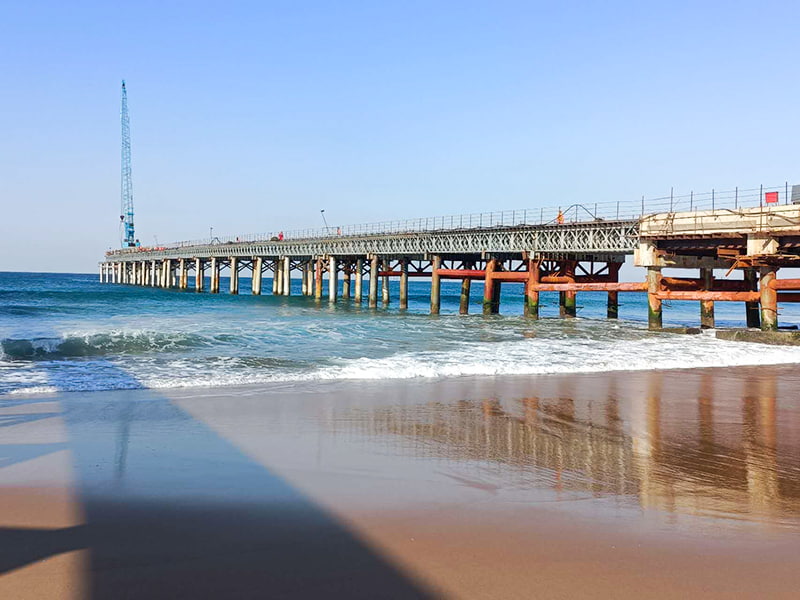
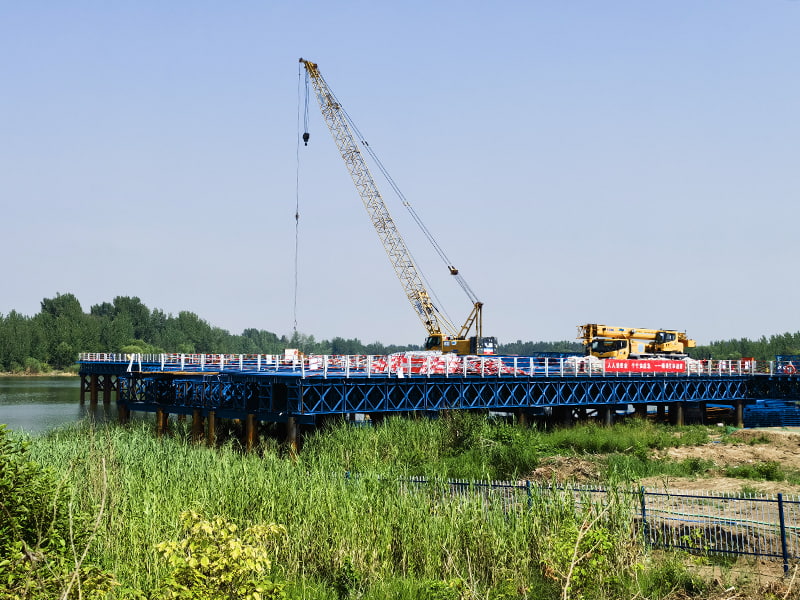
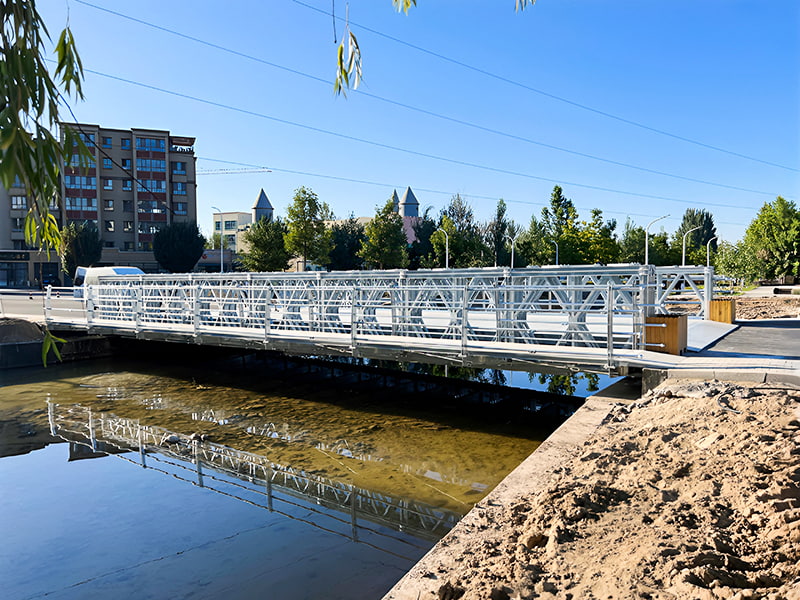
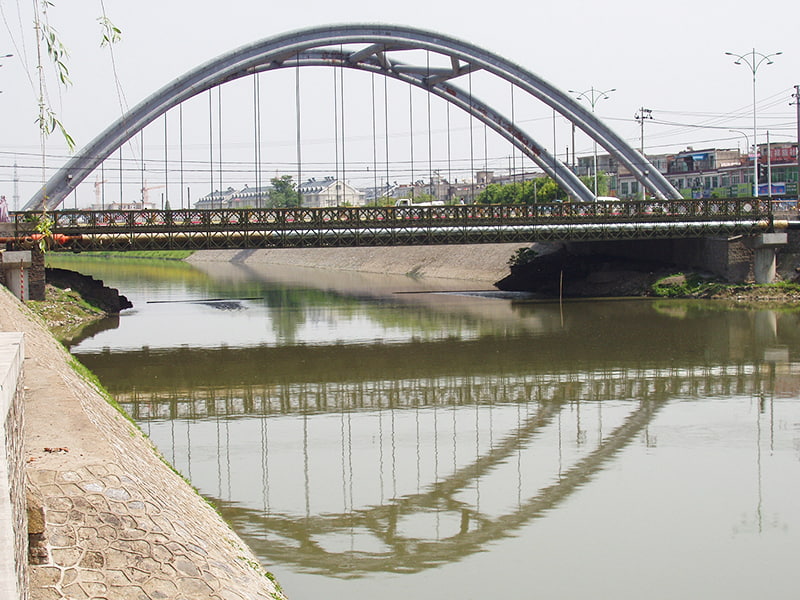
A Modular Bridge is built from prefabricated steel panels, transoms, and chords that bolt or pin together on site, which is why this family of structures covers such a wide range of use cases — from a bailey bridge for road construction crew needs to open a detour within days, to a bailey bridge for river crossing projects where piers can't be poured until the flood season passes. The same panel logic scales up for a modular bridge for industrial projects moving heavy plant equipment, down for a modular bridge for rural roads connecting a village to a market town, and out for a modular bridge for highways carrying continuous traffic loads. What changes between these projects isn't the basic panel — it's how the panel count, deck type, and pier spacing are combined into a working modular bridge solution.
The truss configuration is what actually determines how much weight a span can carry, not the overall length. A single-single (SS) configuration handles light traffic and pedestrian loads over shorter spans, while double-double (DD) or triple-triple (TT) arrangements stack panels vertically and horizontally to push both span length and axle load capacity upward. On our production floor, we build panel sets to the exact configuration a project calls for rather than shipping a fixed catalogue size, because a river crossing with a 40-meter clear span needs a very different truss stack than a rural farm-to-market road with a 15-meter gap.
| Truss Configuration | Typical Span Range | Common Application |
|---|---|---|
| Single-Single (SS) | up to 20m | Rural roads, farm access |
| Double-Single (DS) | 20m - 35m | Secondary roads, light industrial |
| Double-Double (DD) | 30m - 50m | Highway detours, river crossings |
| Triple-Triple (TT) | 45m and above | Heavy industrial, mining haul roads |
Speed of assembly is usually the first question we get from highway contractors managing a detour, and the second question from a rural roads authority trying to reconnect a washed-out crossing before the next rain season. A panel-bridge crew of 10-15 workers can typically launch a 30-meter span in two to four days using cantilever or nose-launch methods, without heavy cranes standing in the river itself. That difference matters most on a modular bridge for highways project where every extra day of lane closure has a real cost to traffic flow, and on a modular bridge for rural roads where equipment access to the site is limited in the first place.
Jiangsu Zhonghai Bridge Equipment Co., Ltd builds panel sets and connecting hardware to consistent tolerances so that field crews aren't fighting mismatched bolt holes or bent chords during launch — a small manufacturing detail that has an outsized effect on how many hours a crew actually spends on site.
A bailey bridge for river crossing generally answers to seasonal water levels and scour around the abutments, so pier foundation work and clearance above flood stage tend to drive the design more than the panel truss itself. A modular bridge for industrial projects, on the other hand, is usually sized around a known, repeated axle load — mining haul trucks, mobile cranes, or plant machinery moving between fixed points — which makes deck plank thickness and running surface wear the bigger design conversation. From remote mountain regions to coastal marine climates, from rapid emergency deployment to permanent infrastructure, Zhonghai's panel and deck combinations are put together to match what a specific site actually demands rather than a one-size answer.
Coastal marine climates bring their own wear pattern — salt exposure accelerates corrosion at connection points long before the steel itself fatigues, which is one reason panel finishing and hardware selection are treated as separate decisions from the truss design.
Choosing a workable modular bridge solution is really a sequence of decisions rather than a single spec sheet: clear span, expected axle load, available assembly footprint on either bank, and whether the crossing is meant as a temporary detour or a structure that stays in place for years. Getting the sequence backwards — picking panel count before confirming pier spacing, for example — is the most common reason a project runs into rework on site. Our factory operates with advanced automation and standardized workflows, enabling us to produce high-strength modular bridge systems built for exactly this kind of decision sequence, so the panel set that leaves the plant already matches the site survey rather than needing field modification.
Zhonghai is not only a manufacturer — the goal on each of these projects is to work through that sequence with the client as a solutions provider, helping build connections that are safer and faster to put in place, whether the end use is a rural road, an industrial site, or a highway crossing meant to carry traffic for the long term.
It depends heavily on climate and traffic loading, but a well-maintained panel bridge with proper corrosion protection commonly serves for decades before major component replacement is needed, with periodic bolt and pin inspection along the way.
Yes — this is one of the practical advantages of a bolted panel system over a cast structure. Panels, transoms, and chords can be disassembled and redeployed at another site, which is why many rural road and emergency-response programs keep a rotating inventory rather than building each crossing new.
The panels and connection hardware can be identical; the difference is mainly in foundation work. A permanent crossing typically sits on concrete abutments and piers, while a temporary detour may use timber cribbing or steel bearing pads that can be removed once the permanent structure reopens.
Generally yes, mainly because of load repetition — a haul road crossing sees far more load cycles per day than a rural road, so deck wear and connection tightness tend to need more frequent checks even though the panel design itself is the same family of structure.

Product Category
Bailey Bridge/Modular Bridge Modular Steel Bridge Pedestrian Bridge Modular Pipe Bridge Truss Bridge Steel StructureContact Us


Copyright © Jiangsu Zhonghai Bridge Equipment Co., Ltd. All
Rights
Reserved
modular bridge manufacturer in china
customized modular bridge supplier
