
 English
  русский
  Español
  Português

Industry News
Bailey Bridges for Sale: The Complete Buyer Guide to Modular Configurations
Content
- 1 Understanding Bailey Bridge Configurations: CB100, CB200, and CB450
- 2 What Determines the Most Economical Bailey Bridge for Sale?
- 3 Procurement Checklist for Buying a Bailey Bridge
- 4 Surface Treatment and Corrosion Protection: What to Specify
- 5 Delivery, Assembly, and Site Support
- 6 Common Applications and Why Buyers Choose Modular Steel Bridges
- 7 Frequently Asked Questions
- 7.1 What is the difference between a Bailey bridge and a modular steel bridge?
- 7.2 How long does it take to assemble a Bailey bridge?
- 7.3 Can Bailey bridges be reused after dismantling?
- 7.4 What is the load capacity of a CB200 Bailey bridge?
- 7.5 Do you provide customized Bailey bridges?
- 7.6 How much does a Bailey bridge cost?
If you are comparing Bailey bridges for sale, the decisive factor is rarely the quoted price per ton. The real cost control comes from matching the structural configuration to your span, traffic load, lane width, and expected service environment. Buying a prefabricated steel truss bridge is a procurement decision, not a catalog selection. The buyer who supplies clear load data, site conditions, and delivery dates will get a lower total installed cost than the buyer who simply asks for the cheapest bridge.
Take a typical case: a municipal contractor needs a temporary crossing over a 28-meter water channel for a construction detour. If the traffic includes 30-ton trucks, a single-row unreinforced configuration will be structurally insufficient. But if that same contractor specifies a double-row single-layer reinforced design, the bridge can carry the load while still using standard 321-type panels. The practical conclusion is that correct specification, not price haggling, saves the most money on a Bailey bridge purchase.
Understanding Bailey Bridge Configurations: CB100, CB200, and CB450
Bailey bridges are built from prefabricated steel panels that bolt together to form truss structures. The three standard series offered by a manufacturing facility are CB100 (321-type), CB200, and CB450. Each series reflects a different panel strength level and is intended for a different span and loading envelope.
CB100: The Classic 321-Type System
The CB100 series is the most widely recognized Bailey bridge family. It uses the standard 321-type panel geometry, which is ideal for medium spans, temporary crossings, and pedestrian or light-to-medium vehicular traffic. When configured as a double-row single-layer reinforced bridge, CB100 bridges are commonly used for river crossings, construction site access, and emergency bypasses. The modular nature of CB100 allows fast assembly without heavy cranes, which matters for contractors working in remote areas.
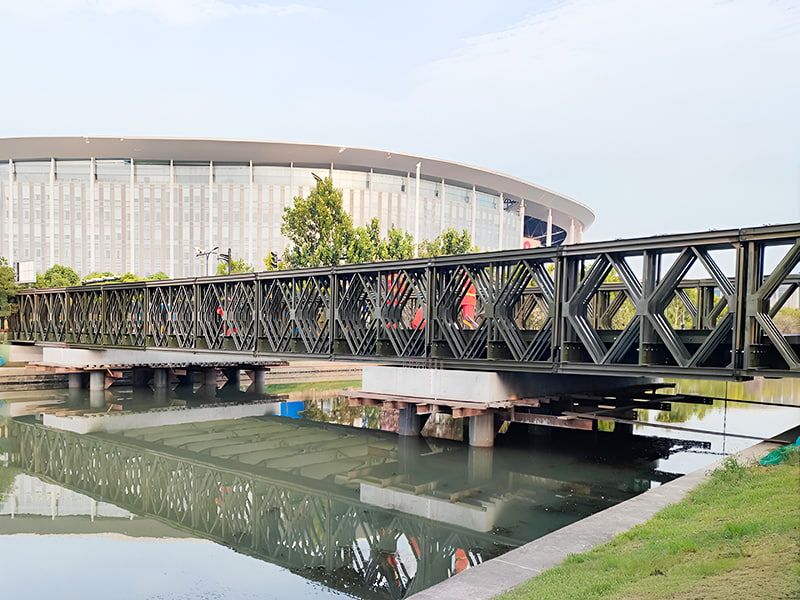 CB 100(321) Bailey Bridge SupplierCB 200 Bailey Bridge Four-Row Single-Layer Reinforced Bailey BridgeView Product →
CB200: Designed for Larger Spans and Heavier Loads
The CB200 series offers higher panel capacity than CB100. It is selected when a bridge needs to reach spans of 40 meters or more, or when the live load exceeds what a standard 321-type configuration can handle efficiently. CB200 bridges appear in many infrastructure projects where a temporary or permanent steel crossing must carry specialized construction vehicles, loaded dump trucks, or even railway construction equipment. A 48-meter double-row single-layer reinforced CB200 is a common configuration for a heavy-duty temporary bypass.
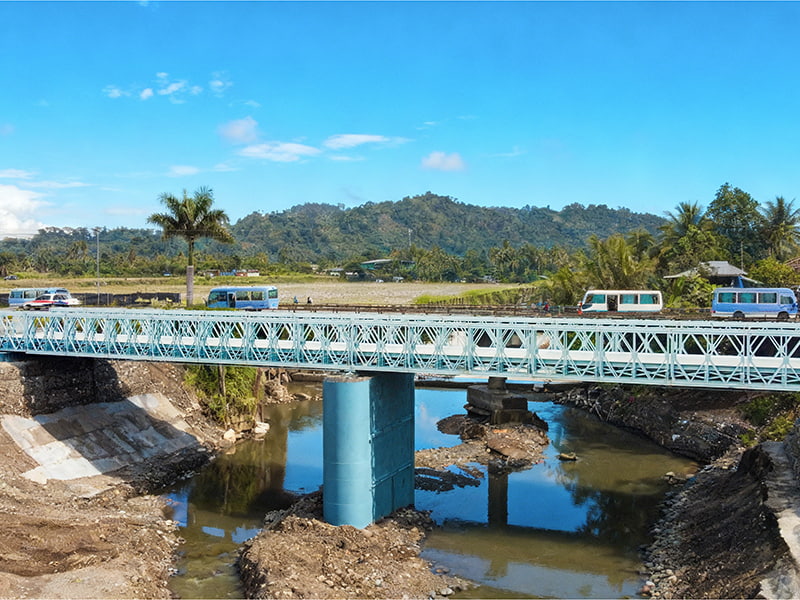 CB 200 Bailey Bridge SupplierCB 200 Bailey Bridge 48-Meter Double-Row Single-Layer Reinforced Bailey BridgeView Product →
CB450: Heavy-Duty and Large Span Applications
The CB450 series is the heaviest standard line in the modular steel bridge family. It is reserved for applications that demand extreme load capacity, such as heavy mining haul roads, industrial crossings, or permanent roadway bridges over wide rivers. A CB450 four-row single-layer reinforced galvanized bridge is an example of a configuration that can handle very high axle loads while maintaining a manageable assembly method. When specifying CB450, the engineer should provide detailed load combinations, deflection limits, and wind/shear considerations to the manufacturer.
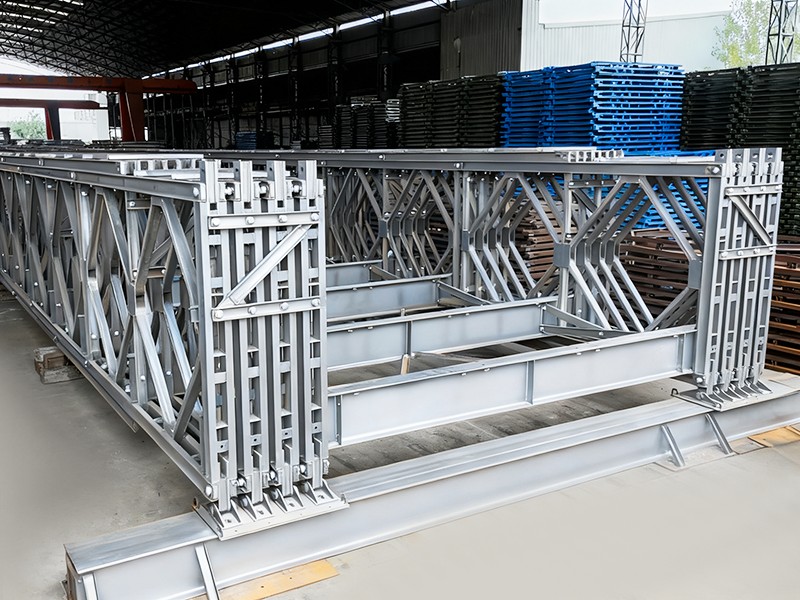 CB 450 Bailey Bridge SupplierCB 450 Bailey Bridge Four-Row Single-Layer Reinforced Galvanized Bailey BridgeView Product →
What Determines the Most Economical Bailey Bridge for Sale?
The most economical Bailey bridge is not the one with the smallest panel count. It is the bridge that uses the minimum steel weight necessary to satisfy the required service life and load conditions. Over-specifying a short span with a heavy CB450 structure wastes money on extra steel and unnecessary assembly labor. Under-specifying a long span with a light CB100 configuration creates a safety risk and can lead to costly strengthening later.
Key variables that decide the final price
Start by defining the effective span between supports, the clear roadway width, and the design vehicle load. Then compare how different series and configurations perform. For example, a 20-meter pedestrian bridge might only need a single-row single-layer CB100. A 35-meter two-lane bridge carrying standard trucks will likely need a double-row single-layer reinforced CB200 or CB100 with truss reinforcement. Each step up in load capacity increases the number of panels and the steel weight, which directly affects both material and shipping costs.
How the assembly method affects total cost
Bailey bridges are meant to be assembled with a launch nose and a crane. If your site allows the bridge to be assembled on the bank and winched across, labor costs stay low. If the bridge must be lifted into place over a deep gorge, the crane rental and site preparation cost may exceed the bridge material cost. An experienced manufacturer will ask about access, foundation types, and available erection equipment before quoting. This is why the cheapest supplier quote often becomes the most expensive project.
Buyers should also weigh whether they need a permanent structure or a temporary one. A temporary crossing can use painted panels and be reused later. A permanent bridge should be galvanized or corrosion-resistant to reduce maintenance over a 30-year design life. The total lifecycle cost, not the initial per-ton price, is the true economy measure for a Bailey bridge.
Procurement Checklist for Buying a Bailey Bridge
Before sending an inquiry to any Bailey bridge manufacturer, compile the following information. Having this data ready will shorten quotation cycles and help the mill produce a technically sound design.
- Define the effective span and support conditions. Measure the clear distance between support points, including the bearing zones. Note the foundation type and soil conditions.
- State the design live load and the loading standard. For example, specify a 30-ton vehicle, a 60-ton tracked vehicle, or a highway class loading. If you follow a specific code, describe the load combinations.
- Provide the clear roadway width. Decide whether it is a single-lane, double-lane, or pedestrian crossing. This affects the number of panels and decking required.
- Select the surface treatment. Choose hot-dip galvanizing for permanent coastal or humid environments, painted panels for temporary projects, or a custom corrosion-resistant coating for aggressive chemical exposure.
- Confirm delivery and site access constraints. Specify whether containers can be unloaded with a forklift or crane, and whether the site is accessible by normal transport.
- Ask about installation guidance and spare parts. A reputable supplier should provide an assembly manual, a spare parts catalog, and remote technical support during the first erection.
- Request a material declaration with the quotation. You should know the steel grade, panel thickness, bolt specification, and any welds that will be visually inspected during delivery.
When you use this checklist, you will quickly see that a structured Bailey bridge guide can help you translate your site data into a workable configuration. The goal is to have the manufacturer propose the right configuration, not to accept the first generic quote.
Surface Treatment and Corrosion Protection: What to Specify
The coating system is not a cosmetic issue. It directly affects whether your Bailey bridge will survive 10 years or 30 years in service. The three most common options are painted steel, hot-dip galvanized steel, and specialized corrosion-resistant coatings. Here is a practical comparison to help you choose.
| Treatment | Best Fit | Advantages | Considerations |
|---|---|---|---|
| Painted | Short-term temporary crossings, rental fleets | Lower initial cost, easy touch-up | Needs repainting every 3-5 years in exposed environments |
| Hot-dip galvanized | Permanent roads, coastal areas, long service life | Sacrificial protection, low maintenance | Higher initial cost, careful handling to avoid scratching |
| Corrosion-resistant coating | Water treatment plants, chemical zones, humid tropics | Extra protection against aggressive environments | Requires specialized application and can extend lead time |
When a buyer asks for a Bailey bridge for sale, the specification should clearly state the coating type and the minimum dry film thickness. This will prevent the supply chain from cutting corners. A bridge that is expected to remain in place for a decade should always be hot-dip galvanized, even if the initial cost is higher than painted panels.
Delivery, Assembly, and Site Support
A Bailey bridge is a complete system, not just a pile of panels. The manufacturer’s responsibility does not end at the factory gate. Delivery and site support are integral parts of the procurement and can determine whether a bridge opens on schedule.
What a typical delivery timeline looks like
After the engineering drawings are approved, most manufacturers can complete fabrication within 3 to 6 weeks for standard configurations. Custom designs with long spans or special coatings may require 8 to 12 weeks. Shipping time depends on the destination and whether the bridge is packed in containers or breakbulk. It is important to ask for a delivery schedule that includes the container loading date, the estimated sea or road transit, and the customs documentation.
Assembly support from the manufacturer
For a simple one-lane temporary bridge, a small crew of six workers can often assemble the structure in 3 to 5 days if they have a crane and follow the manual. But for double-lane heavy bridges, the alignment and launch process can be complex. A professional manufacturer should provide either an assembly manual plus remote video guidance or, for major projects, an on-site engineer to oversee the first launch. Buyers should ask about the level of support included in the price before placing an order.
Additionally, consider the availability of spare parts. Panels, transoms, bolts, and decking can be damaged during transport or after years of use. A supplier who stocks the standard parts and can expedite replacements at a negotiated rate adds real value to the purchase. When you compare Bailey bridge suppliers, ask specifically about the spare parts policy and the years of production history for that exact panel type.
Common Applications and Why Buyers Choose Modular Steel Bridges
The Bailey bridge family is used in more scenarios than the typical construction site. Understanding these applications helps a buyer decide whether a standard catalog item is enough or a custom design is needed.
Emergency and disaster response
When a flood washes out a rural road, authorities need a bridge that can be flown in, trucked to the site, and erected without heavy engineering equipment. Bailey panels are ideal because they are lightweight enough to be carried by two or three people and can be assembled using simple winching methods. Bailey panels for emergency and construction engineering are specifically designed for rapid deployment, allowing a temporary crossing to reopen within days.
Water utility and pipeline crossings
Modular pipe bridges combine the structural strength of a Bailey bridge with support cradles for large-diameter pipes. This application is common in municipal water systems and sewage treatment plants. In these projects, the bridge spans channels or tanks and carries not only the pipe weight but also the stress from internal water pressure. A CB100 modular pipe bridge is a cost-effective solution when the span is less than 30 meters.
Construction platforms for bridges over existing roads
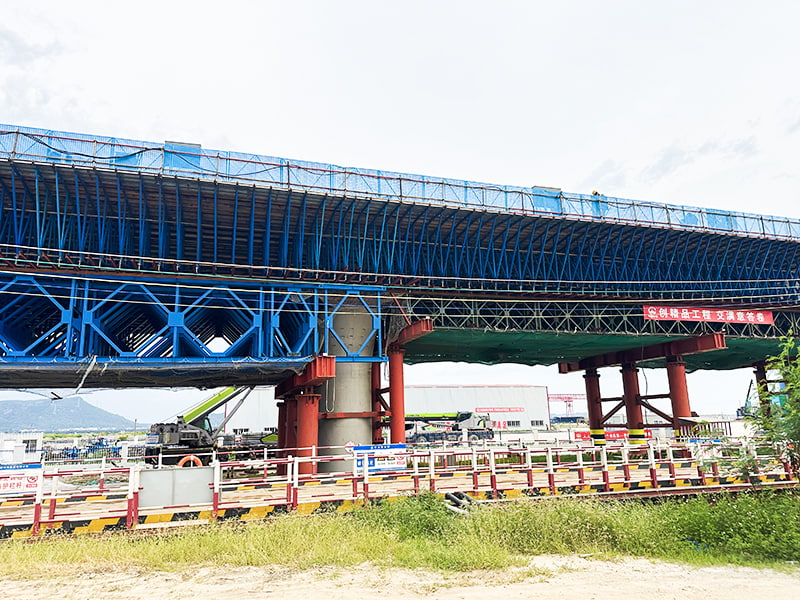
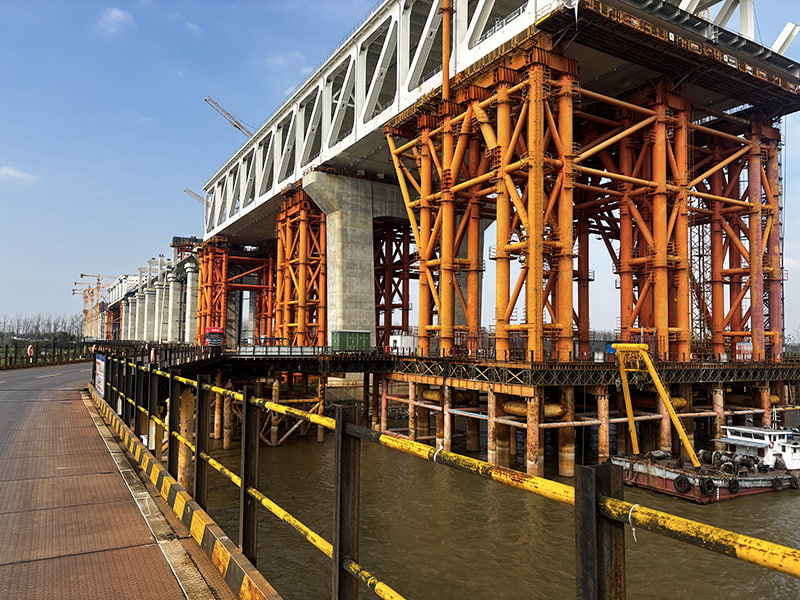
When a new bridge must be built over a busy highway or a wide river, the contractor can use a construction platform to create a temporary work area. The platform is supported by the same Bailey panels, and it allows workers to access the structure safely without closing the road below. These platforms are also valuable for maintenance work on existing bridges.
Pedestrian and cycle bridges
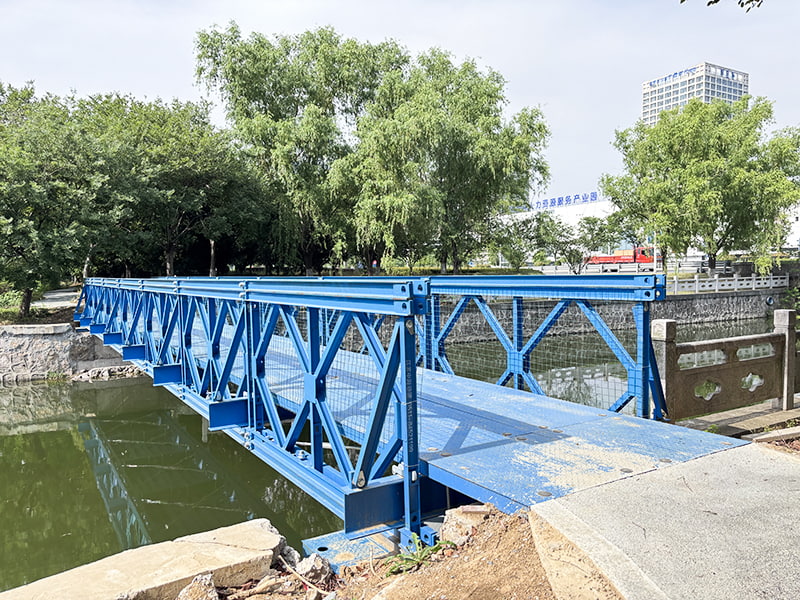
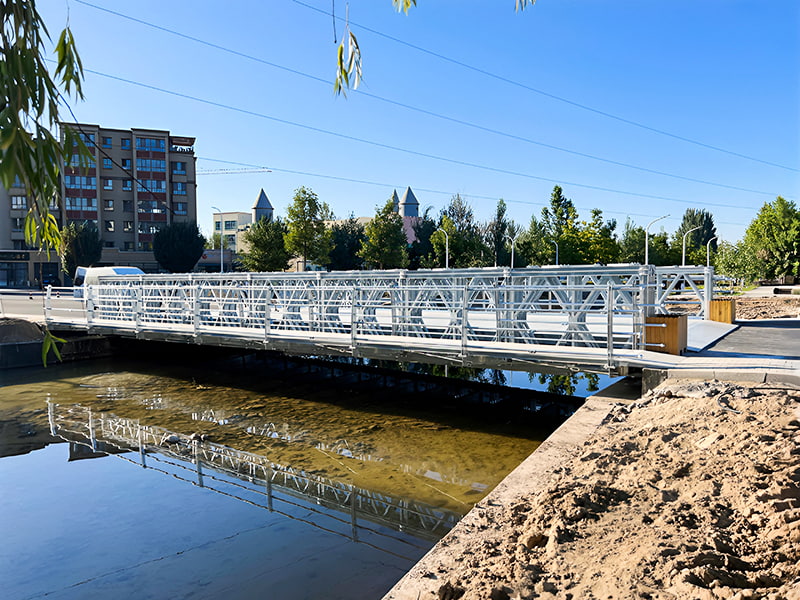
A single-row single-layer reinforced Bailey bridge can carry pedestrians, bicycles, and light maintenance vehicles. Municipalities use these for park trails, footpaths, and temporary school crossings. The blue painted corrosion-resistant pedestrian bridge is a popular choice because it combines a clean look with a long coating life.
For heavy-duty industrial sites, a CB450 large span heavy load galvanized Bailey bridge is the right call. It can handle haul trucks in mining operations or concrete mixer trucks in precast yards. The key is to match the application to the correct series, and a manufacturer that supplies the full range from CB100 to CB450 can advise you honestly based on your data, not on what happens to be in stock.
CB 450 Bailey Bridge SupplierCB 450 Bailey Bridge Four-Row Single-Layer Reinforced Galvanized Bailey BridgeView Product →Frequently Asked Questions
What is the difference between a Bailey bridge and a modular steel bridge?
The terms are often used interchangeably. A Bailey bridge is a specific type of modular steel bridge that originated with the classic British wartime design. A modular steel bridge, in the broader sense, can include other prefabricated truss types such as CB200 or CB450 systems. In practical procurement, the seller will use “Bailey bridge” to refer to 321-type panels and similar modular panel systems.
How long does it take to assemble a Bailey bridge?
Assembly time depends on the span, the number of rows, and the site conditions. A small single-lane bridge of 15 to 20 meters can be erected by a crew of four in about two days if the abutments are ready and a crane is available. A large double-lane bridge with multiple rows may take one to two weeks, including the launch sequence. The manufacturer’s manual and on-site engineer guidance will improve the actual schedule.
Can Bailey bridges be reused after dismantling?
Yes. This is one of the main reasons buyers choose Bailey bridges. Because panels are bolted together, they can be dismantled and reused for another crossing. For rental contractors, a painted Bailey bridge can be repainted and deployed on a new project, often for decades. The surface treatment and the condition of bolts after dismantling are the key factors that affect reusability.
What is the load capacity of a CB200 Bailey bridge?
The load capacity is not a single number. It depends on the span, the number of panels, whether it is reinforced, and the deck width. A typical CB200 double-row single-layer reinforced bridge can carry standard highway trucks if the span is under 45 meters. For heavier loads, the manufacturer will need to run a structural calculation based on the live load model you supply. Do not expect a precise capacity without providing the span and vehicle configuration.
Do you provide customized Bailey bridges?
A reputable manufacturer can customize the span, lane width, and surface treatment to match your project. Custom designs may include pipe bridges, gangway bridges, large-span truss bridges, and construction support frames. You should always send a preliminary site layout and load data to the manufacturer so they can verify the configuration before fabrication.
How much does a Bailey bridge cost?
There is no fixed price. The cost is determined by the total steel weight, the surface treatment, the deck type, and the shipping distance. For a rough planning range, a 20-meter temporary pedestrian bridge might be far less expensive than a 45-meter double-lane CB200 bridge. To get a meaningful quotation, provide the effective span, design load, and expected use duration. The manufacturer should then return a price that includes the panel system, transoms, decking, connection bolts, and installation guidance.
When you search for Bailey bridges for sale, focus on the technical fit rather than the lowest unit price. Know your span, your load, your coating requirement, and your delivery logistics. Then choose a manufacturer that offers the full product range, a documented quality control process, and hands-on support from design through launch. A supplier that asks detailed questions about your site conditions is the supplier you want to negotiate with.
Start your inquiry by sending a simple table of your site conditions: clear span, deck width, live load, coating preference, and target delivery date. With that information, you can expect a configuration recommendation that will perform safely and economically for many years.

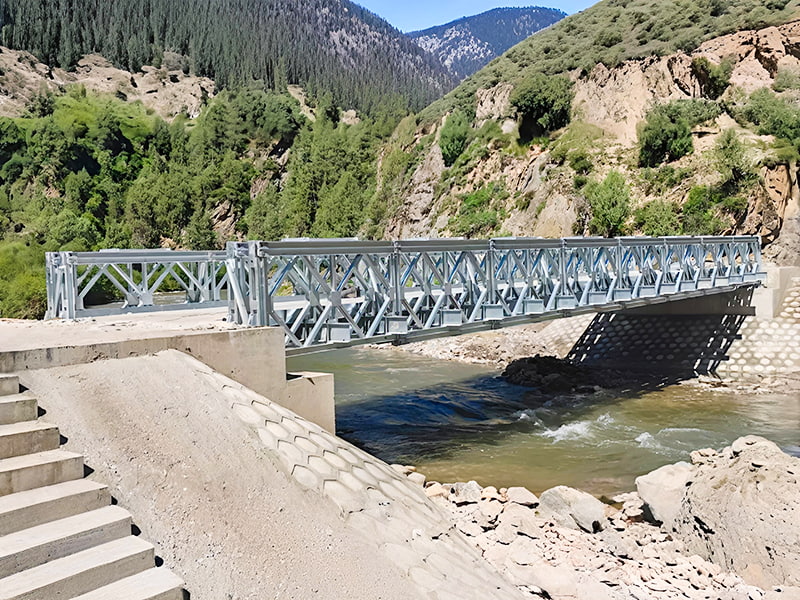

We respond quickly to all international requests and provide technical support when needed.
Product Category
Bailey Bridge/Modular Bridge Modular Steel Bridge Pedestrian Bridge Modular Pipe Bridge Truss Bridge Steel StructureContact Us

+86-511-84522866
+86-13921582699

zhwm@zjql.com

Building 1,83#, dantu New Town, Yanjiang Road, Dantu District, Zhenjiang, Jiangsu, China
Copyright © Jiangsu Zhonghai Bridge Equipment Co., Ltd. All
Rights
Reserved
China bailey bridge for sale
bailey bridge supplier from china
